
Tears of things
(EN version below)
Il racconto di un viaggio obbligato
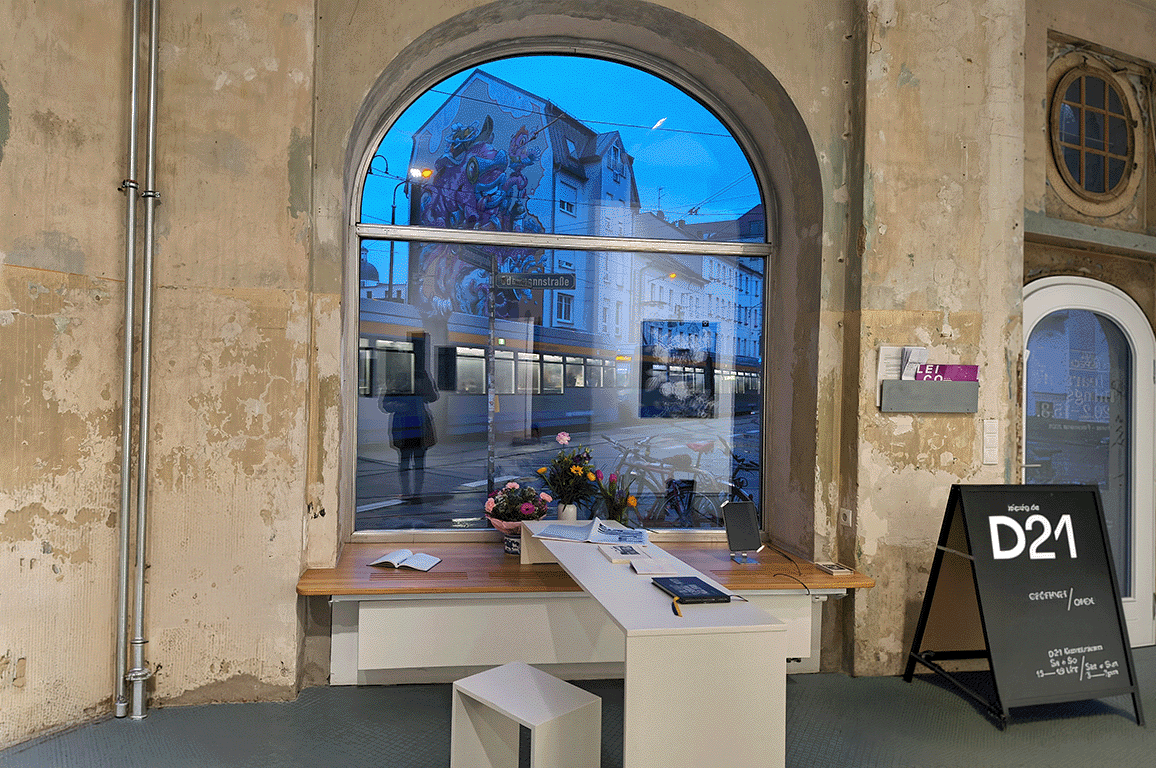
Qualche settimana fa mi sono trasferita ad Altlindenau e mi sono imbattuta nel vicino Atelier 21 proprio sotto casa. In una domenica piovosa di fine febbraio ho scoperto questo spazio molto interessante e potente dove vengono esibite mostre e altri eventi culturali, molto diffusi in questo quartiere di Lipsia, così come in tutto l’ovest lipsiano.
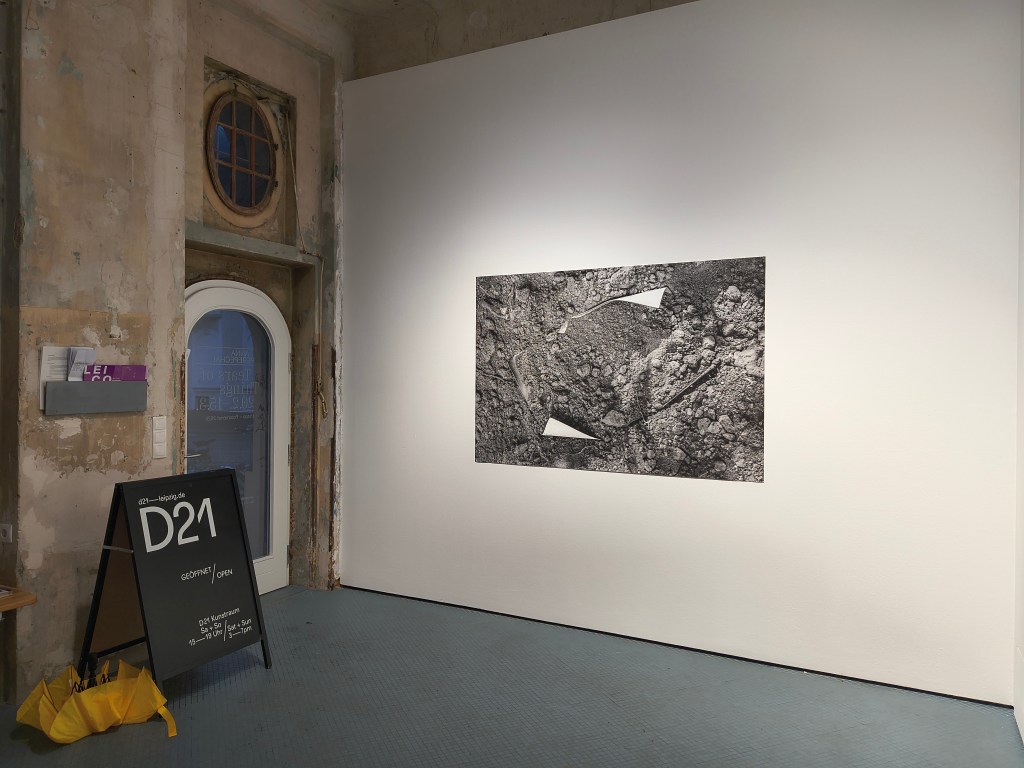
In quel frangente ho avuto l’opportunità di perlustrare la mostra “Tears of things” vincitrice della Open Call all’interno del circuito f/stop istituito da fondazione D21 proprio per dare maggiore risalto e valore alla scena fotografica e agli artisti di Lipsia.
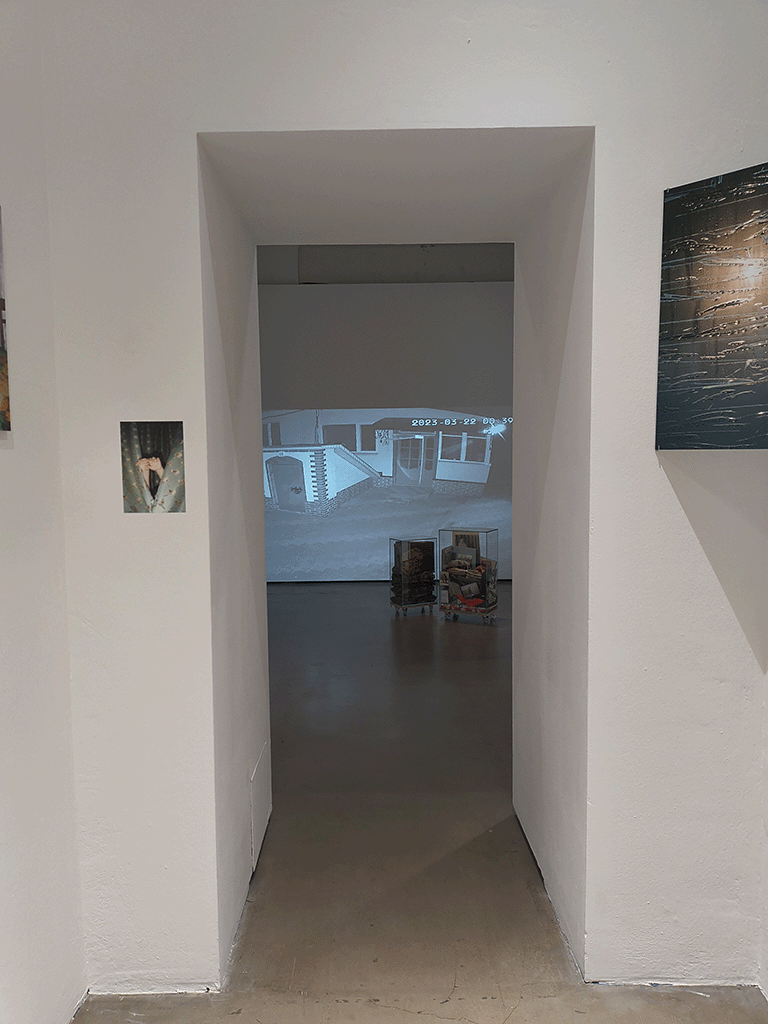
La mostra è stata creata dalla fotografa e artista Anna Perepechai e racconta del suo viaggio dalla sua terra natia, l’Ucraina, verso la Germania (Lipsia) nel maggio del 2022 lasciando casa, affetti e famiglia. La mostra è un racconto visivo, ma anche tattile e sonoro di ciò che lei ha visto e vissuto in Ucraina durante la guerra, che purtroppo ancora è in corso.
Dall’Ucraina verso Lipsia
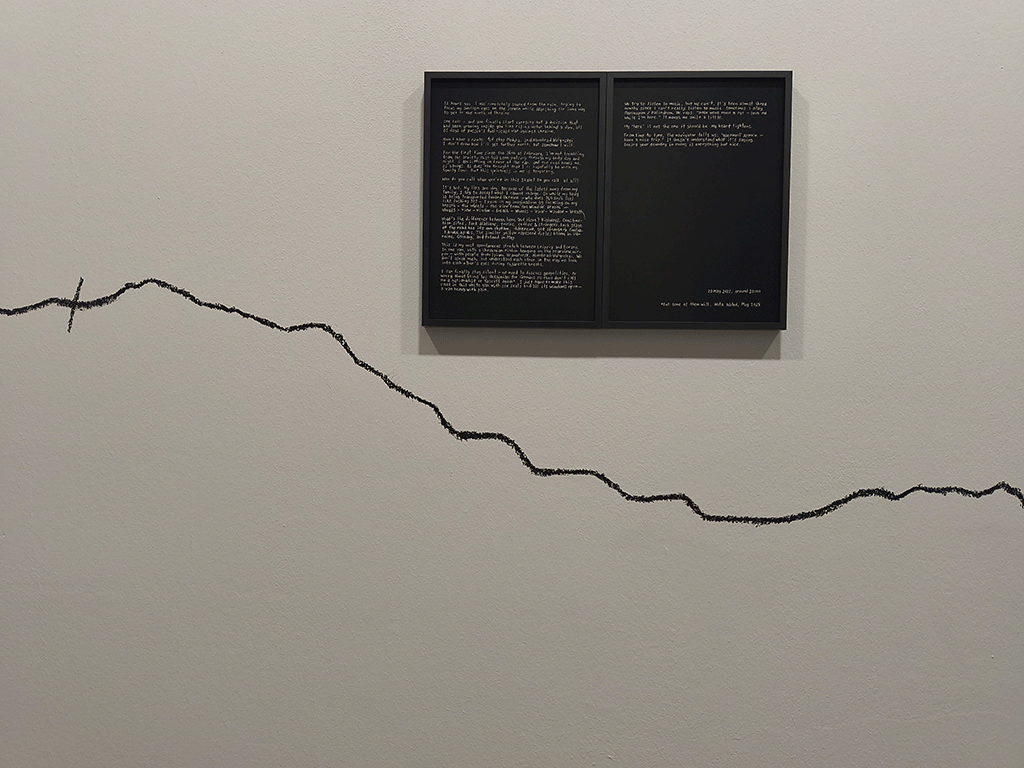
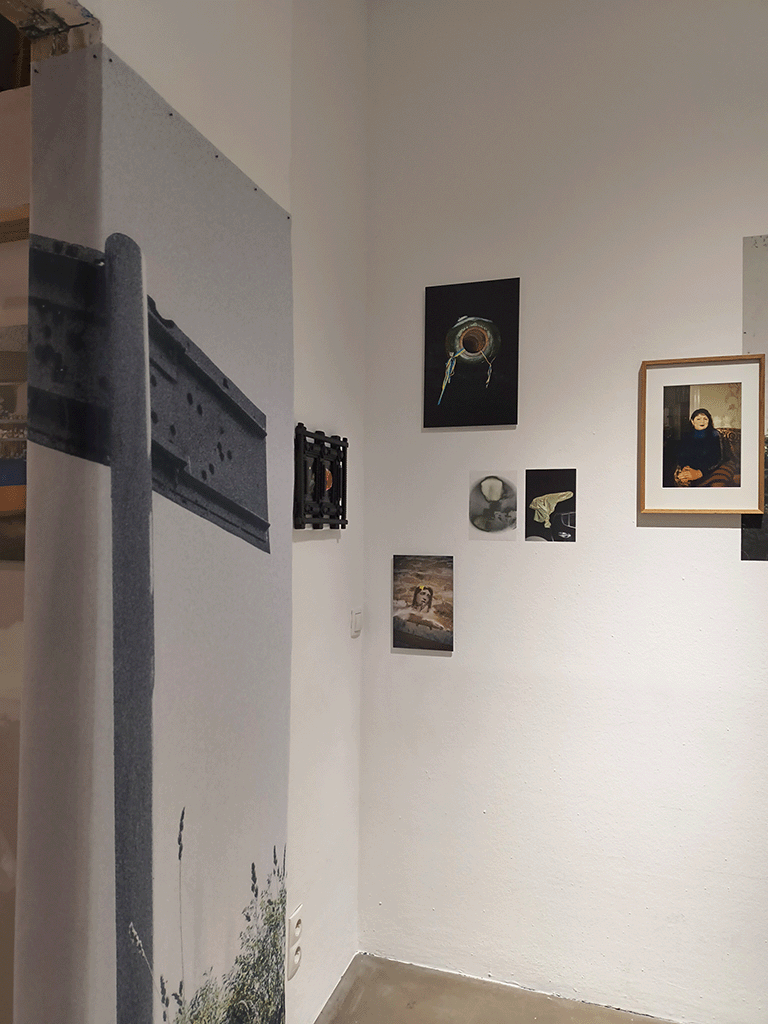
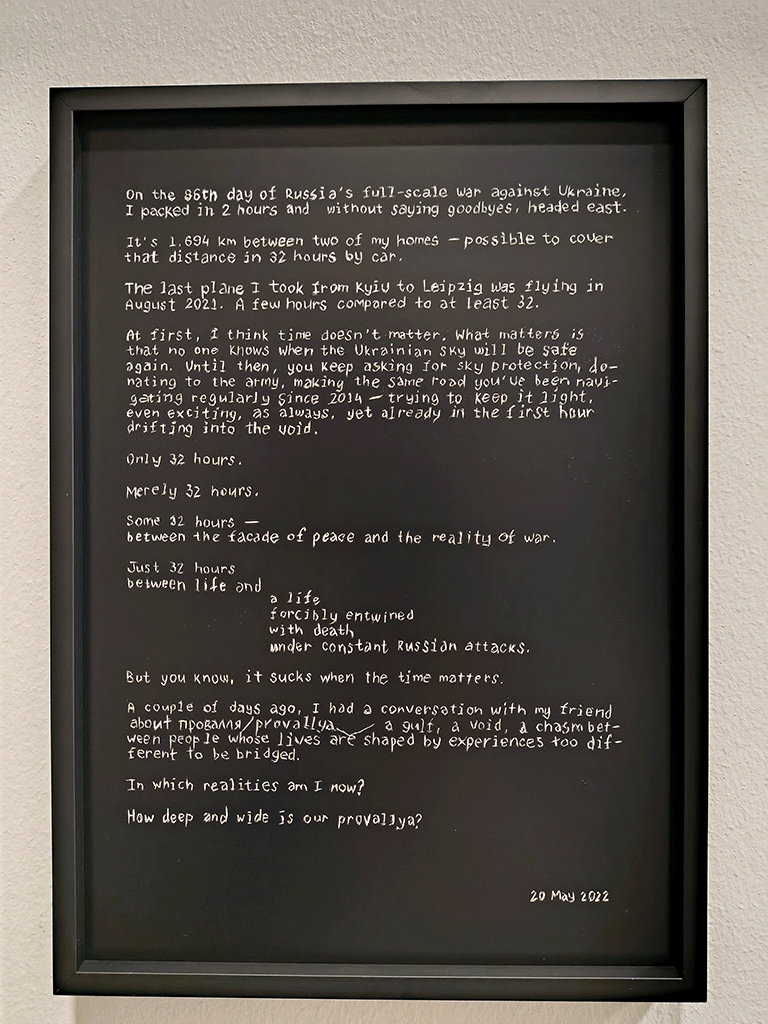
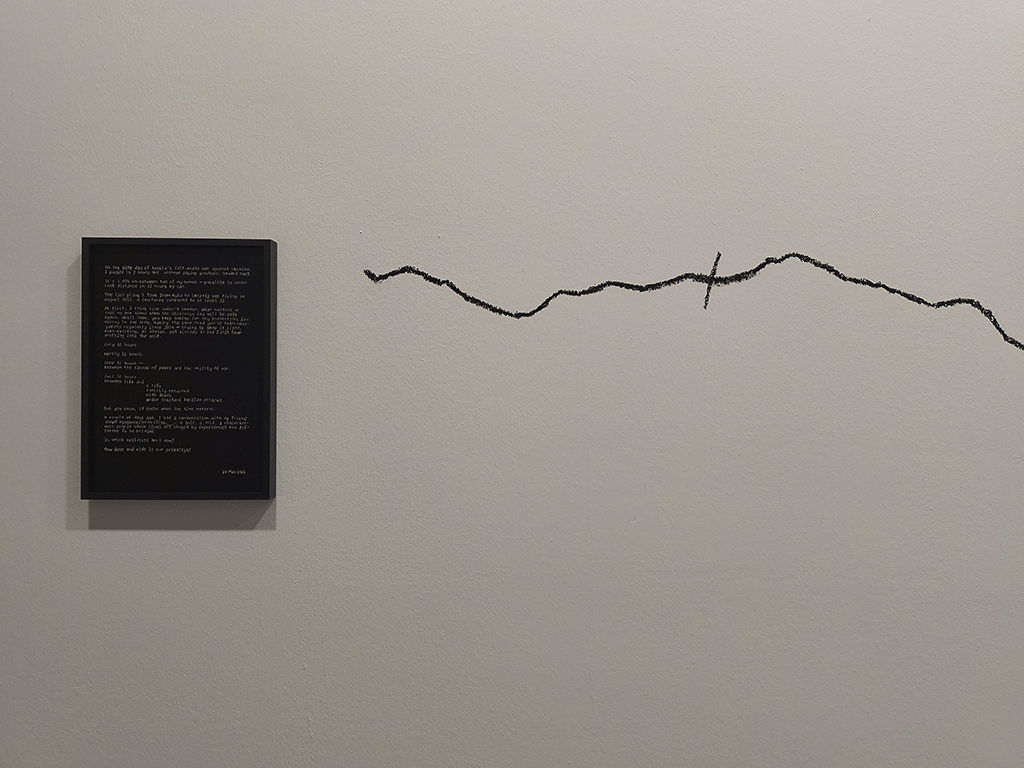
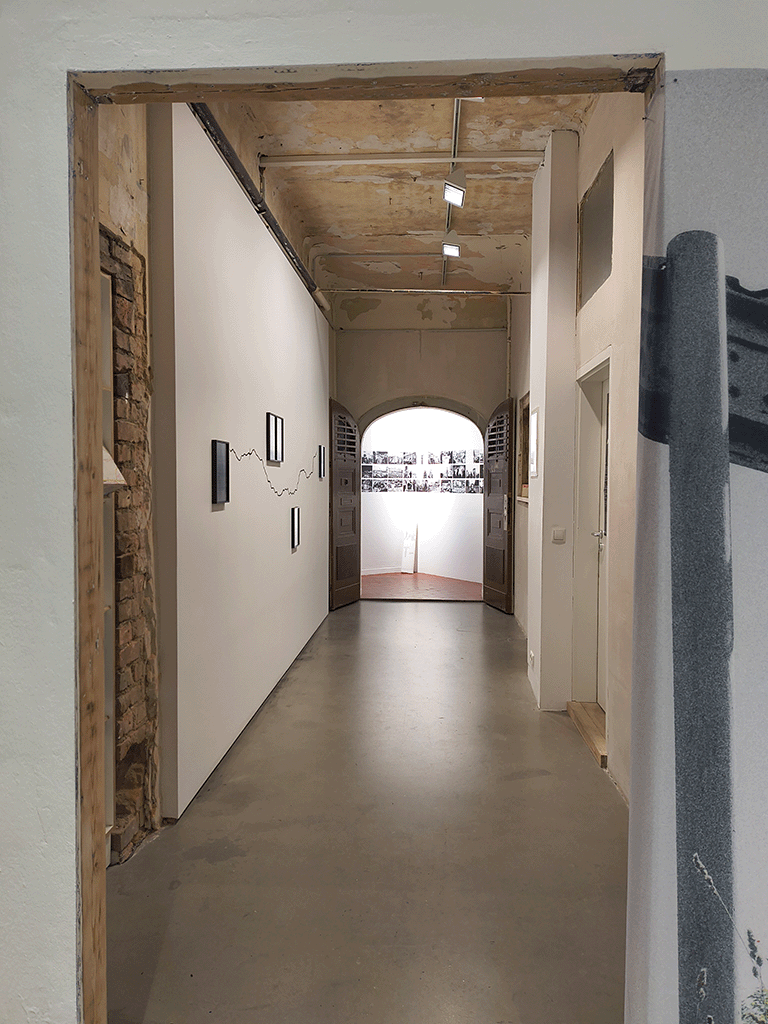
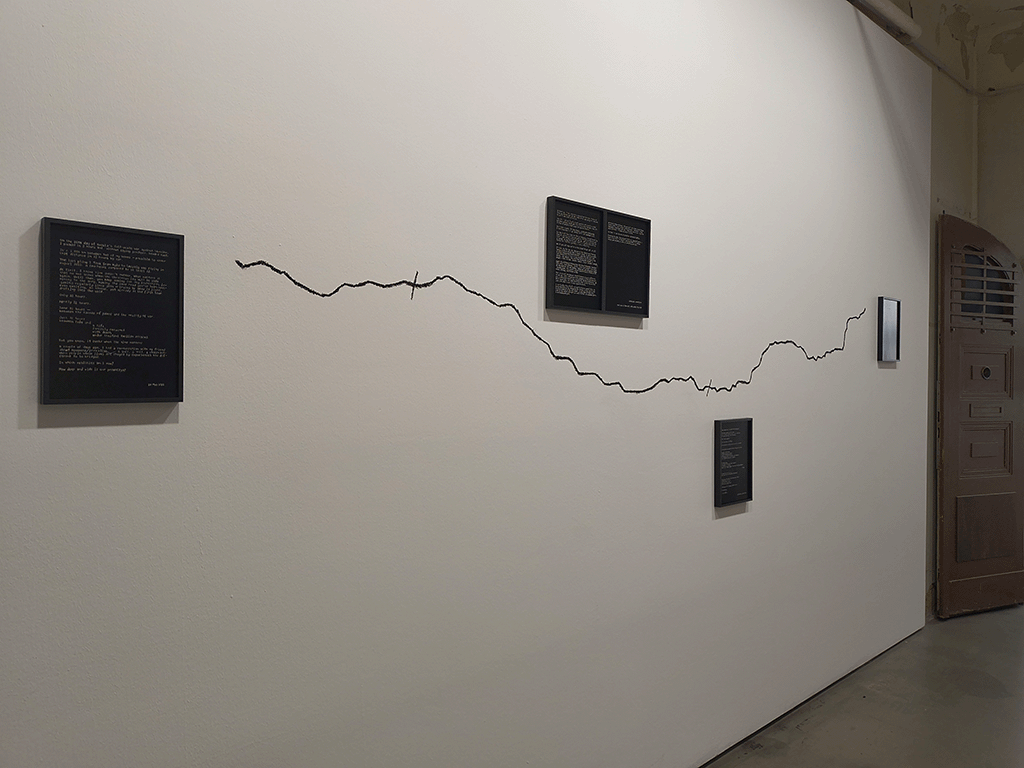
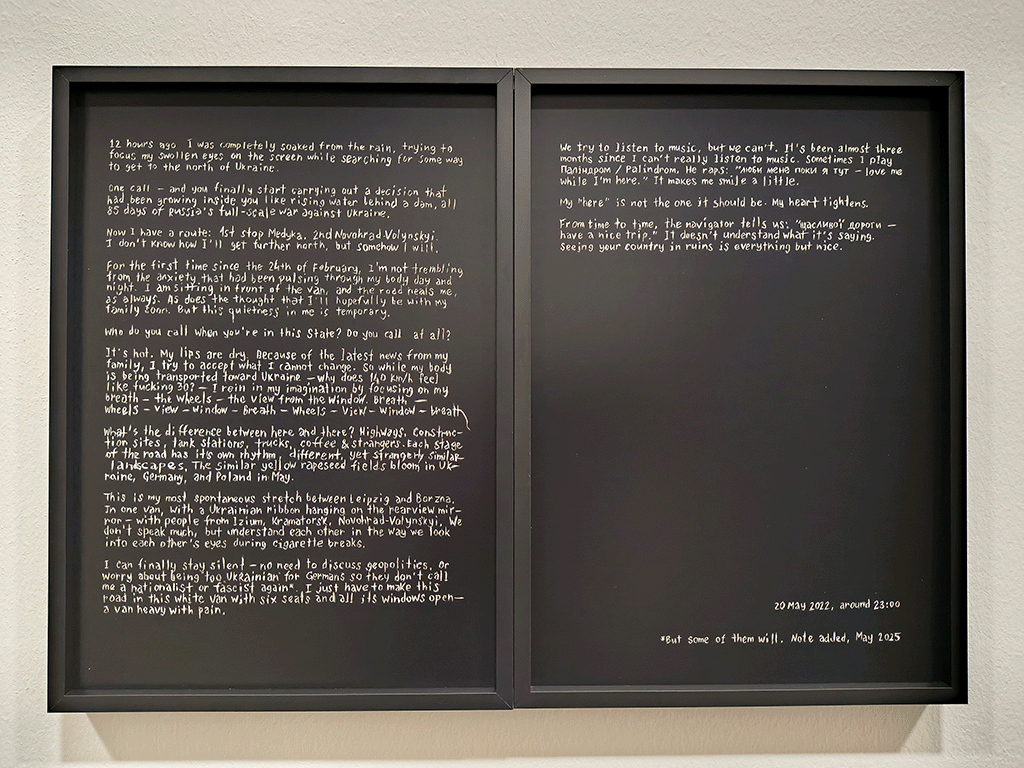
Nell’immagine sopra: un tratto del viaggio percorso dall’Ucraina del Nord verso la Germania, raccontato come un percorso rappresentato da un filo spinato nero. Un’immagine iconica e simbolica di quanto stava accadendo e di come Anna ha percepito la dimensione di quel viaggio. Le tappe sono scandite da tavole nere, sulle quali lei ha ripreso e inciso a caratteri bianchi le sue riflessioni, gli stati d’animo e dove si è interrogata sul perchè di tutto ciò.
Il viaggio rappresenta la dimensione reale del distacco fisico dai suoi legami e dalla famiglia d’origine, ma anche la dimensione introspettiva di affranto e forzato abbandono. Su un muro bianco e con pochi tratti Anna è riuscita a rappresentare e a iconificare la brutalità della guerra e il senso di sradicamento dalla sua terra.
La terra come simbolo della perdita
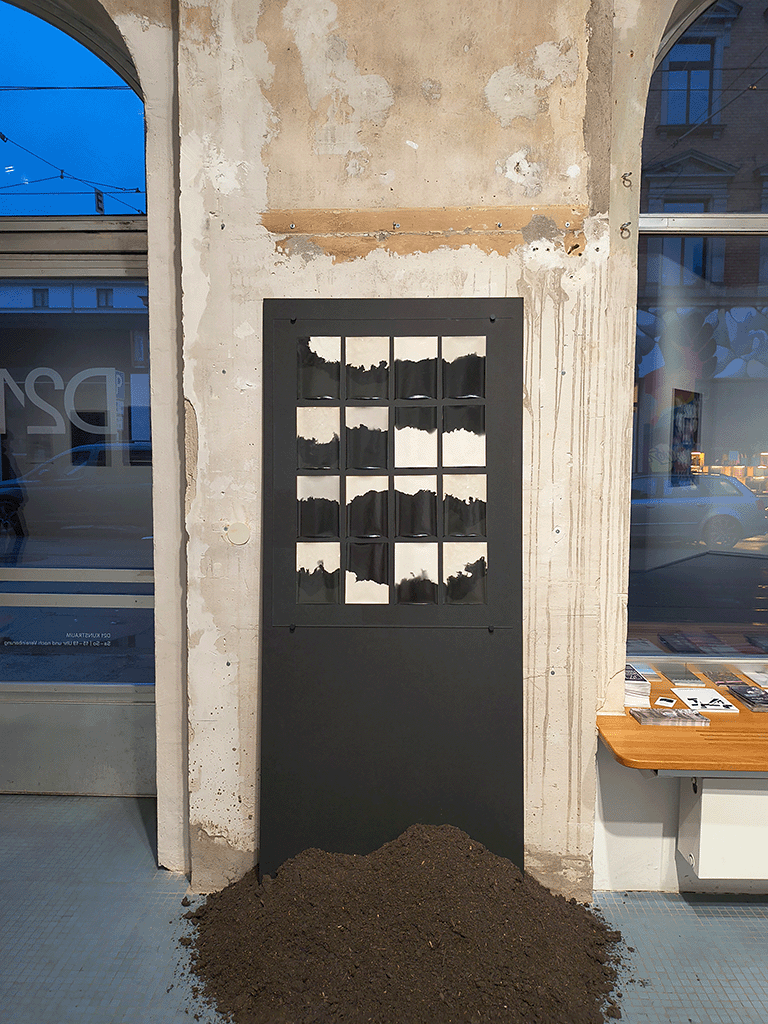
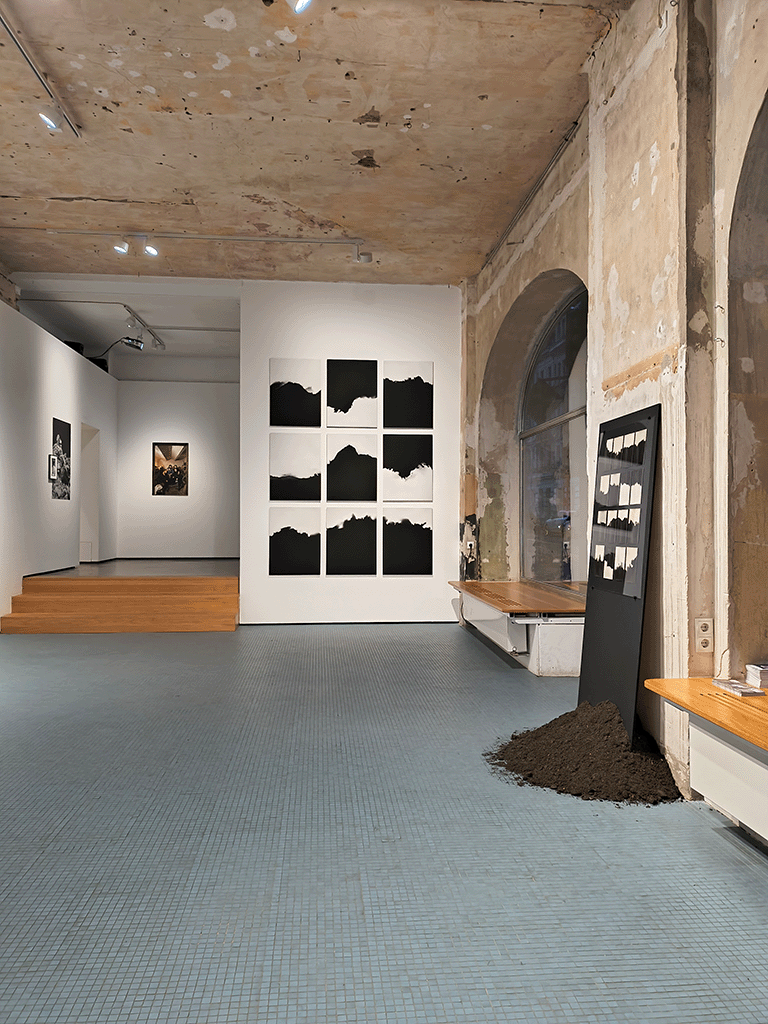
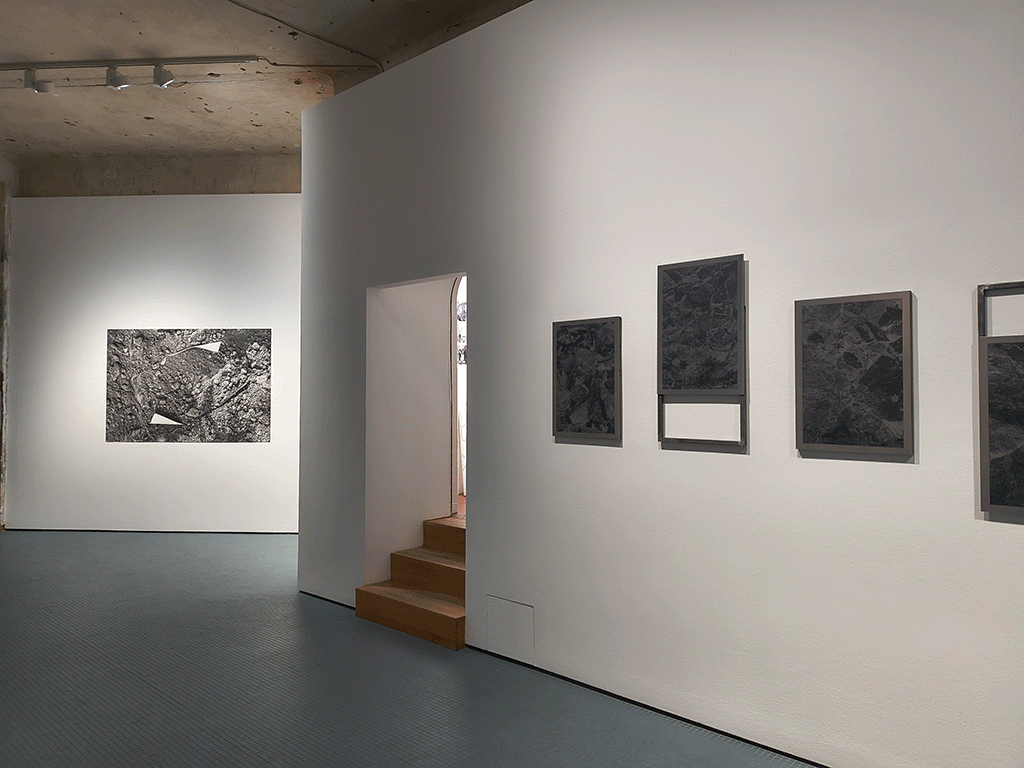
La terra che ritorna come simbolo dai pluri significati: è la terra lasciata, la terra di sepoltura dei morti, vittime della guerra, la terra come simbolo di identità e di appartenenza. Durante i giorni a casa Anna ha sperimentato una tecnica, lasciando i propri negativi nel terreno coperti, quali effetti si producessero sulle fotografie che sarebbero poi state stampate. Creando successivamente una camera oscura ha poi realizzato le fotografie: l’immagine soprastante ne è il risultato. Una serie di riprese in bianco e nero di effetti della terra sulla carta.
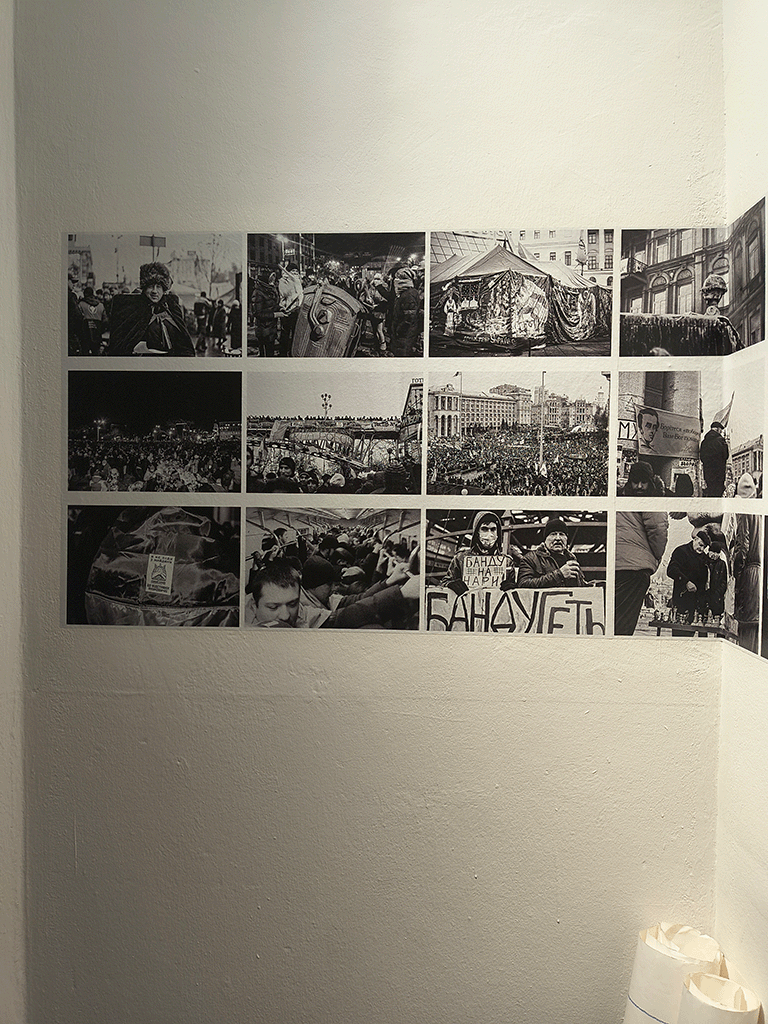
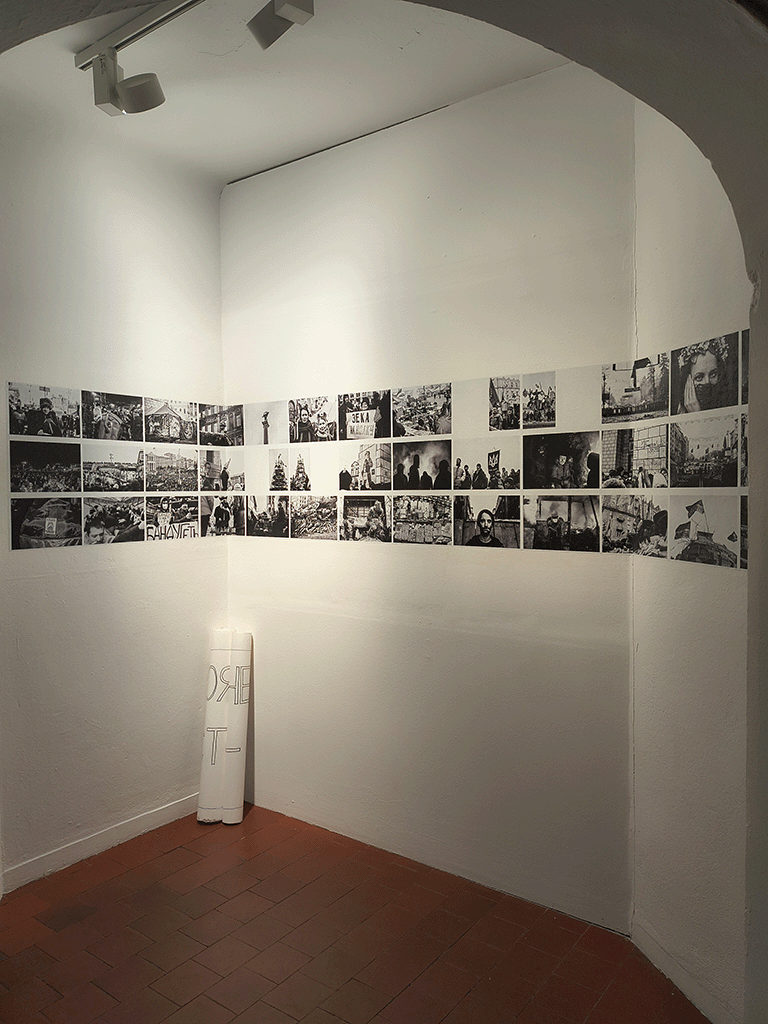
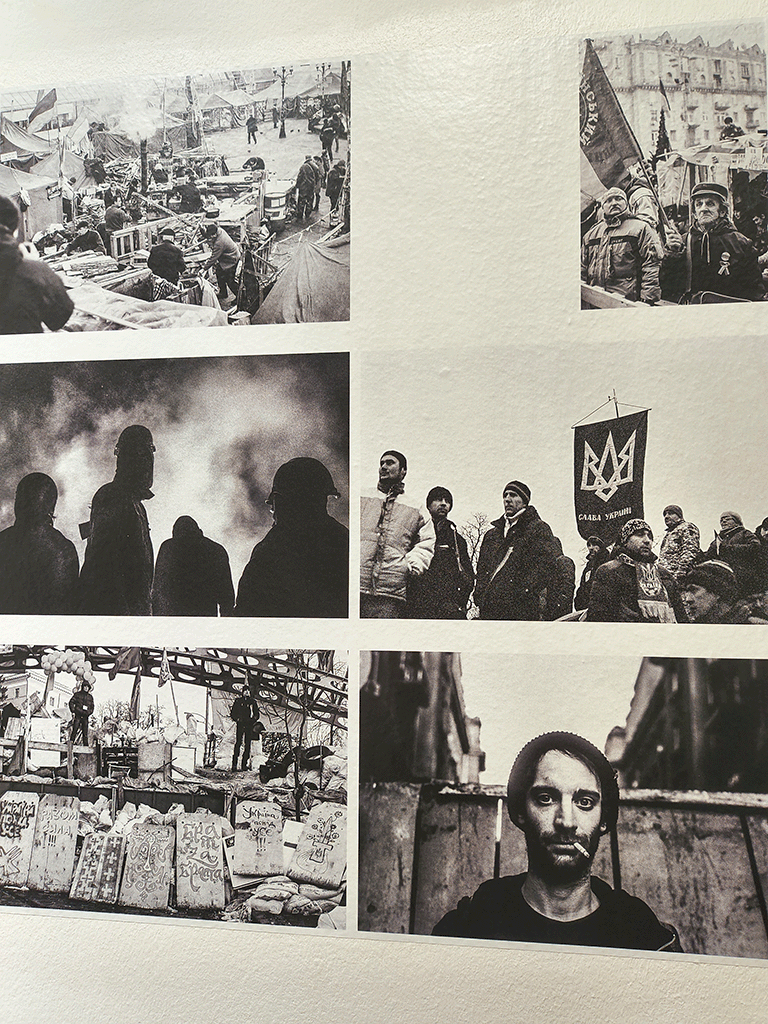
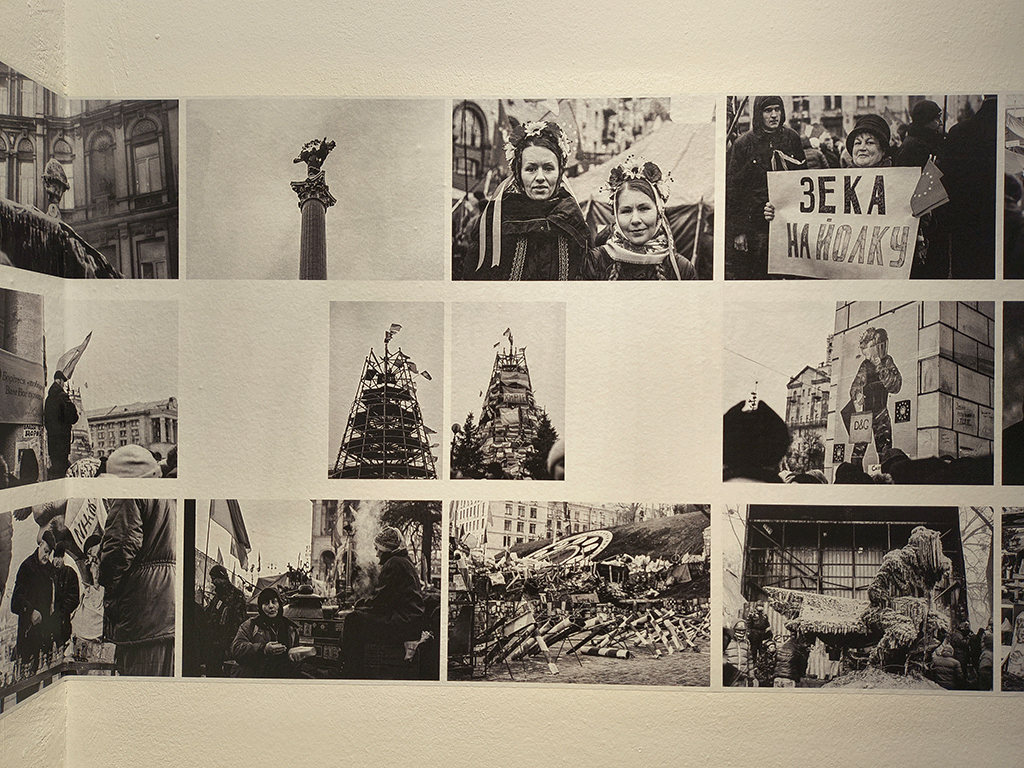
Nelle immagini sottostanti inoltre alcuni scatti delle sommosse, delle ribellioni, delle proteste del popolo che ha dovuto subire le conseguenze di una guerra non voluta, ma decisa da pochi. Sono scatti popolari, intimi, pieni di verità e di realtà vissuta sulla propria pelle.
…visioni popolari
EN Version
The Story of a forced Journey
A few weeks ago, I moved to Altlindenau and stumbled upon the nearby Atelier 21 right across the street from my apartment. On a rainy Sunday in late February, I discovered this fascinating and dynamic space, which hosts exhibitions and other cultural events—a common occurrence in this neighborhood of Leipzig, as well as throughout the western part of the city.
At that time, I had the opportunity to explore the exhibition “Tears of Things,” the winner of the Open Call within the f/stop circuit established by the D21 Foundation specifically to highlight and elevate the photography scene and artists of Leipzig.
The exhibition was created by photographer and artist Anna Perepechai and recounts her journey from her homeland, Ukraine, to Germany (Leipzig) in May 2022, leaving behind her home, loved ones, and family. The exhibition is a visual, but also tactile and auditory, account of what she saw and experienced in Ukraine during the war, which unfortunately is still ongoing.
From Ukraine to Leipzig
In the image above: a segment of the journey from northern Ukraine to Germany, depicted as a path marked by black barbed wire. An iconic and symbolic image of what was happening and of how Anna perceived the scale of that journey. The stages are marked by black panels, on which she has recorded and inscribed in white letters her reflections, her moods, and where she questioned herself about the reason for it all.
The journey represents the real dimension of physical separation from her ties and her family of origin, but also the introspective dimension of heartbreak and forced abandonment. On a white wall and with just a few strokes, Anna has managed to represent and symbolize the brutality of war and the sense of uprooting from her homeland.
The earth as a symbol of loss
The earth returns as a symbol with multiple meanings: it is the earth that has been left behind; it is the earth in which the victims of war have been buried; and it is a symbol of identity and belonging. During her time at home, Anna experimented with a technique of burying her negatives in the ground to see how this would affect the later prints. After setting up a darkroom, she developed the photographs; the image above is the result. It is a series of black-and-white shots capturing the effects of the earth on the paper.
The images below also include shots of riots, rebellions and protests by people who suffered the consequences of a war they did not want, but which was decided by a few. These are popular, intimate shots, full of the truth and reality experienced firsthand.
 ReVivoArtistry
Leave a comment