
Abandoned houses
Zschockersche Straße, 49-51, 04229 Leipzig
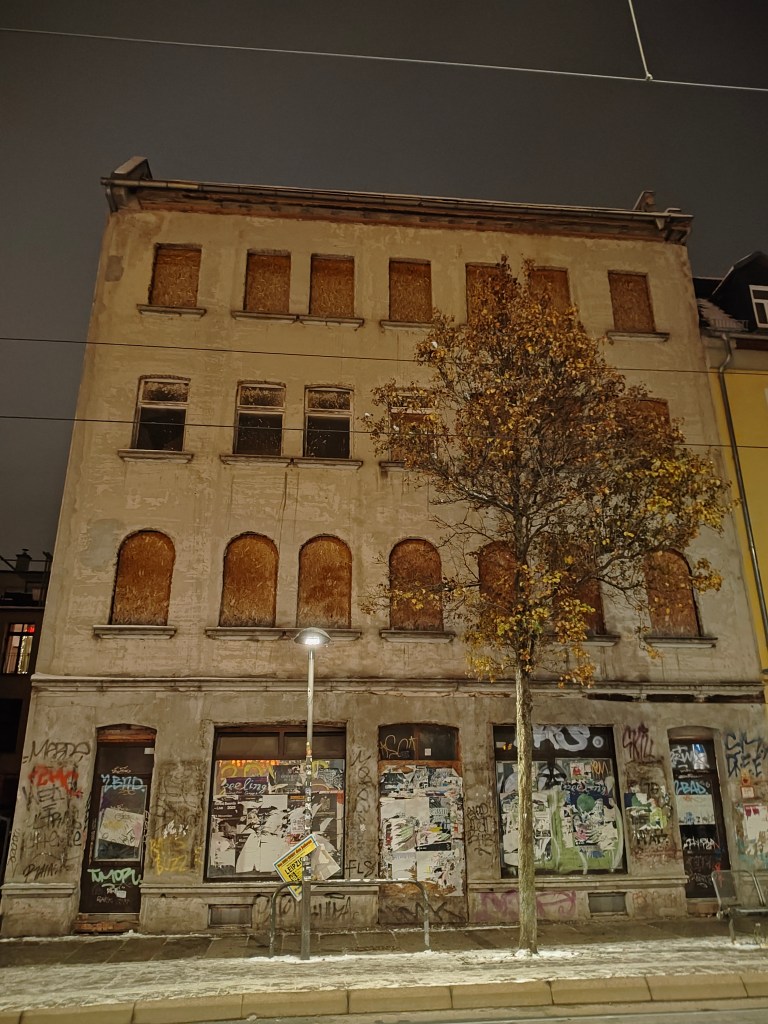
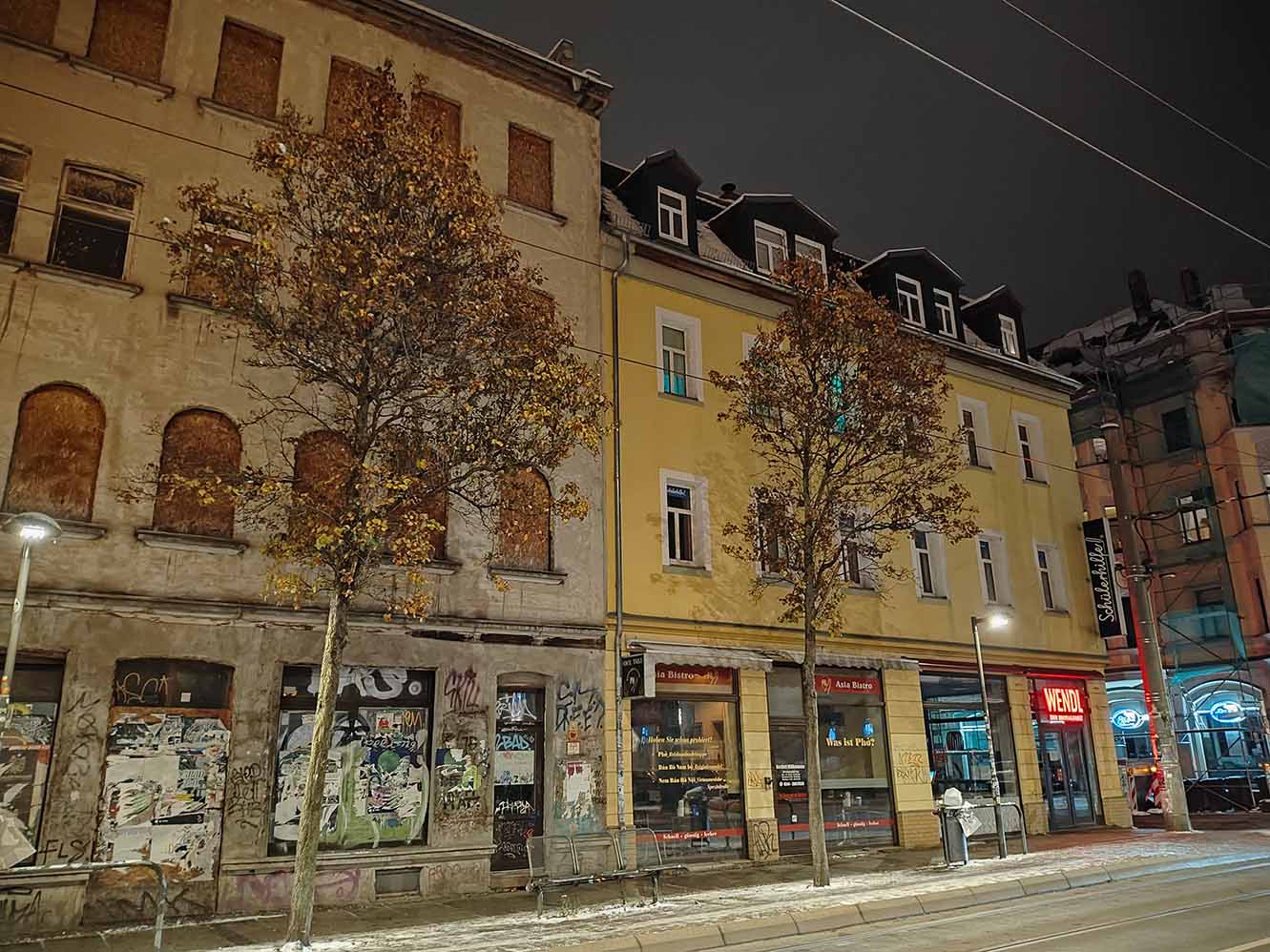
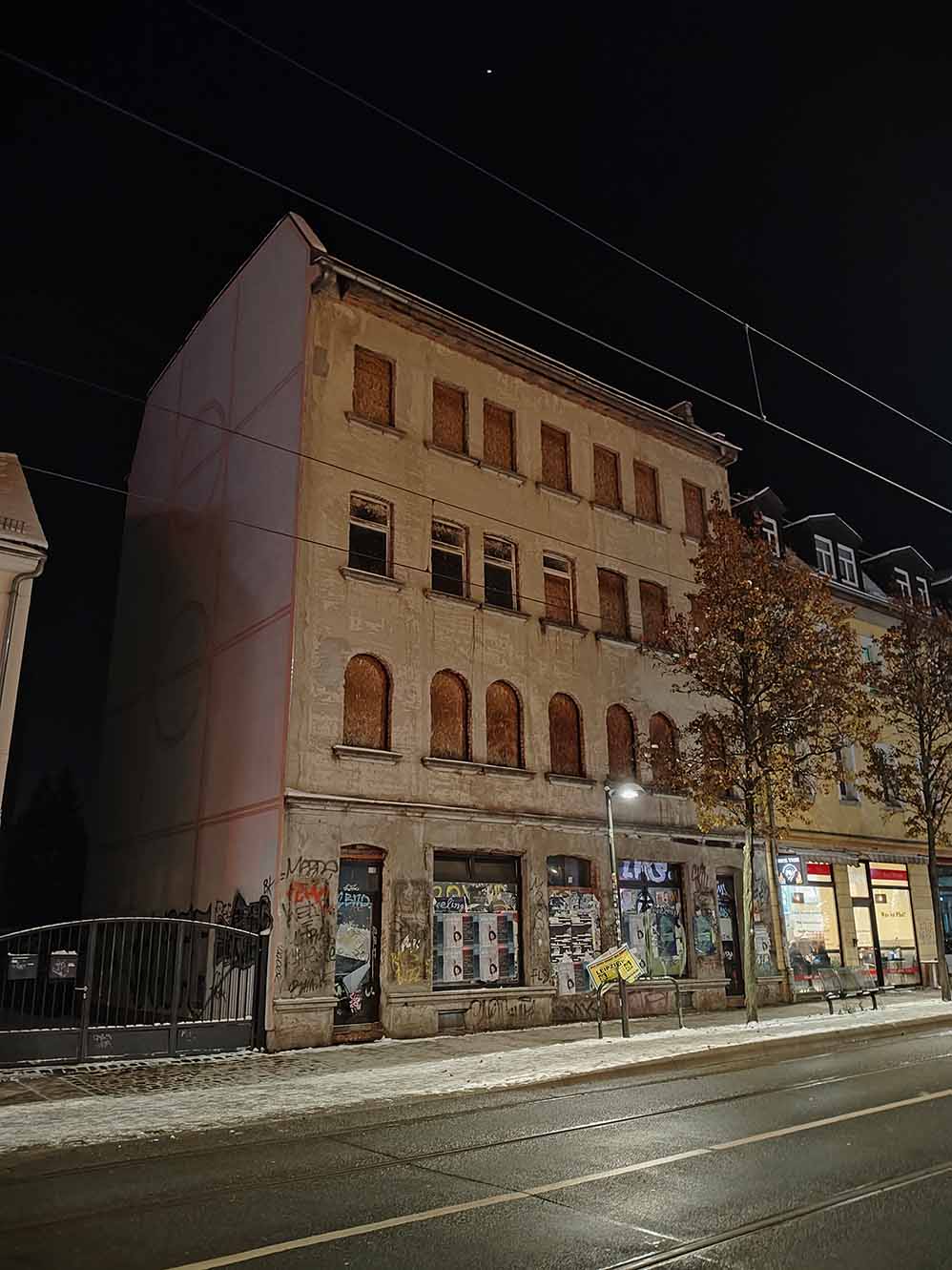
Plagwitz is one of the districts in the west of Leipzig (Germany) where you can still see traces of the old German Democratic Republic, even in such a central street as Zschockersche Strasse, where almost all the buildings around it have been restored. This building gives a nostalgic feeling in its appeal and reveals the history of a time the city went through in an aggressive way, showing itself without any “defence”.

Plagwitz
Neben einer Baulücke
Translated from German, it literally means ‘near a building hole’, meaning that there’s a vacant lot where a building used to stand. Another trace of the GDR era.
An Unused Opportunity: Abandoned Architecture in the Heart of Plagwitz, Leipzig
In the vibrant district of Plagwitz, one of Leipzig’s most dynamic and rapidly transforming neighborhoods, stands a strikingly abandoned building—a relic of the city’s industrial and post-socialist past. Surrounded by cafés, co-working spaces, art galleries, and newly renovated lofts, this neglected structure feels oddly out of place, yet serves as a stark reminder of Leipzig’s complex urban history.
Following the fall of the Berlin Wall in 1989, many industrial and residential buildings in Leipzig—particularly in districts like Plagwitz—were left vacant due to deindustrialization and population decline. While much of the neighborhood has since been revitalized, some buildings remain in limbo, untouched for decades despite their prime location and architectural potential.
Leipzig, often called the most attractive city in the former East Germany, is experiencing a housing crunch driven by growing demand and a steadily rising population. In this context, buildings like the one in Plagwitz represent missed opportunities. Their restoration could not only alleviate housing pressure but also contribute to sustainable urban development, making use of existing structures rather than expanding outward.
The question is no longer whether there is demand—there is—but how quickly these spaces can be reimagined and reintegrated into the life of the city. In a district that thrives on innovation and cultural energy, leaving buildings empty is no longer just a loss of heritage—it’s a lost economic and social opportunity.
 ReVivoArtistry, Inh. Stefania Molinari