
Altlindenau
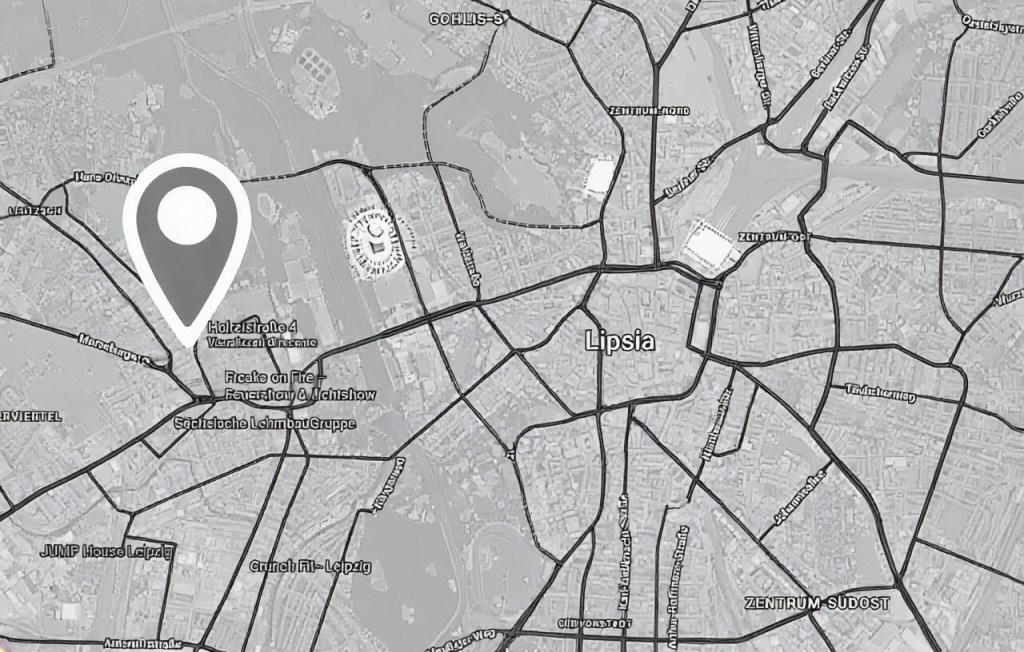
Holteistraße, 4, 04177 Leipzig, Germany
Altlindenau (Leipzig)
Description
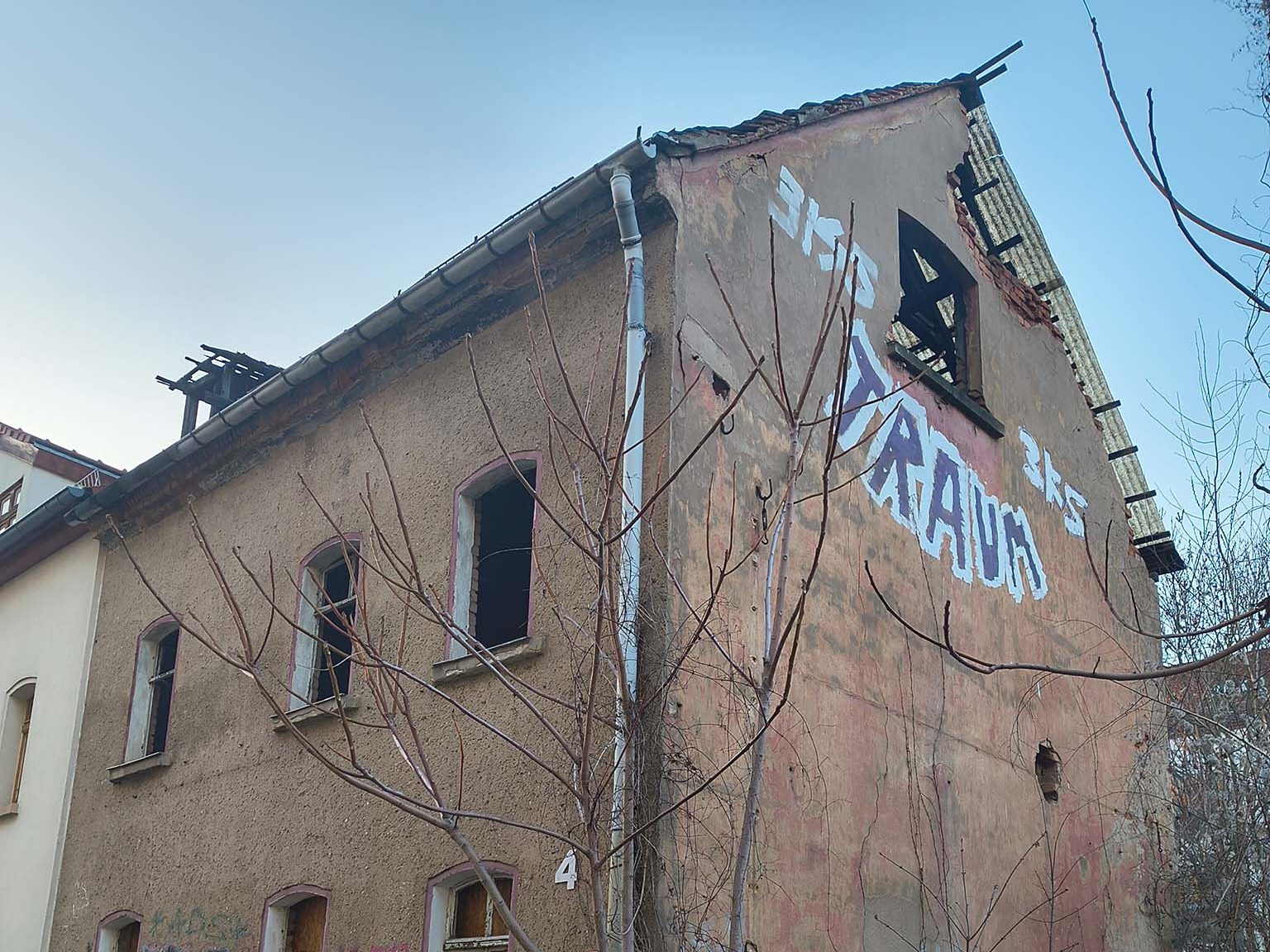
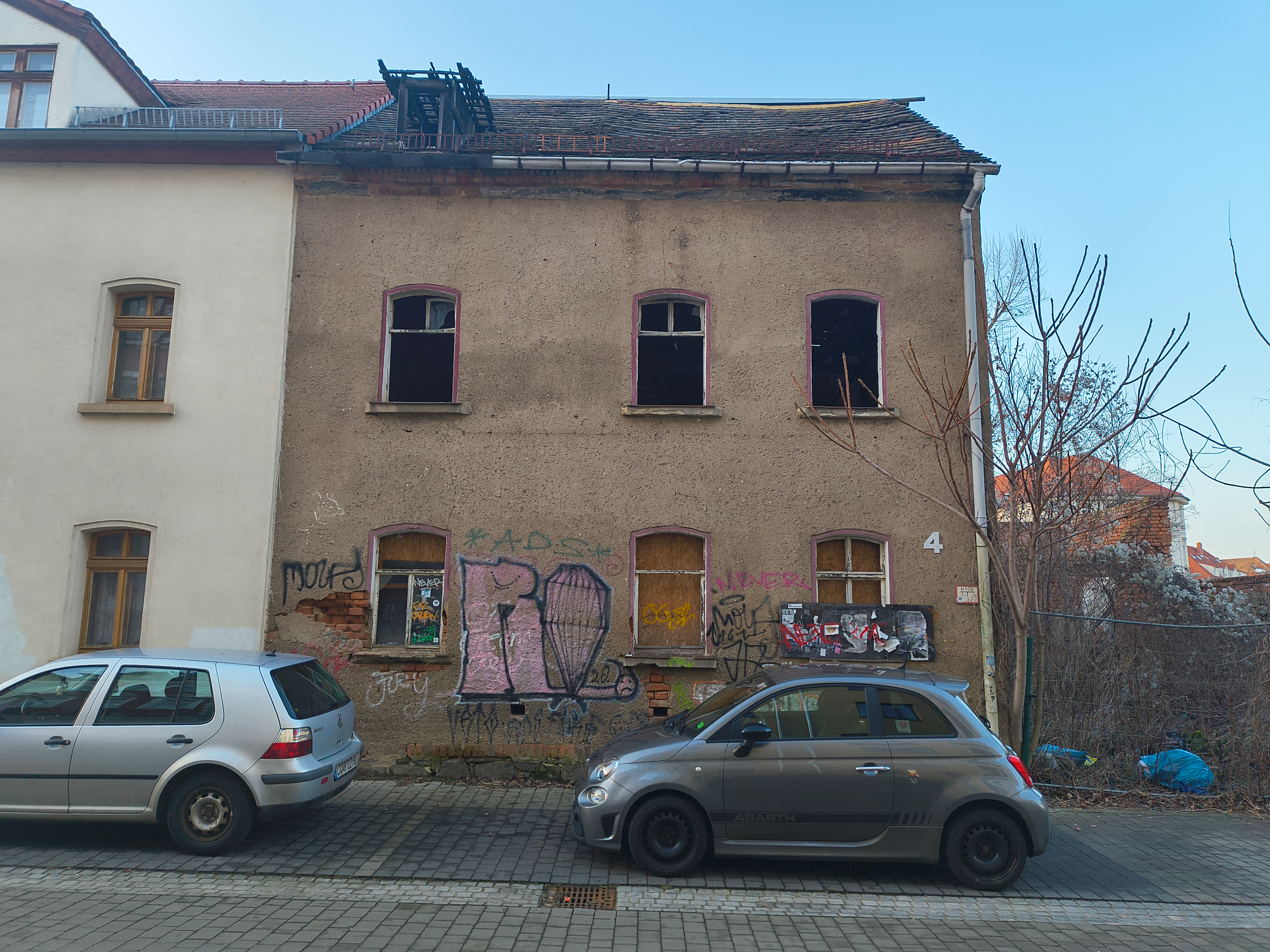
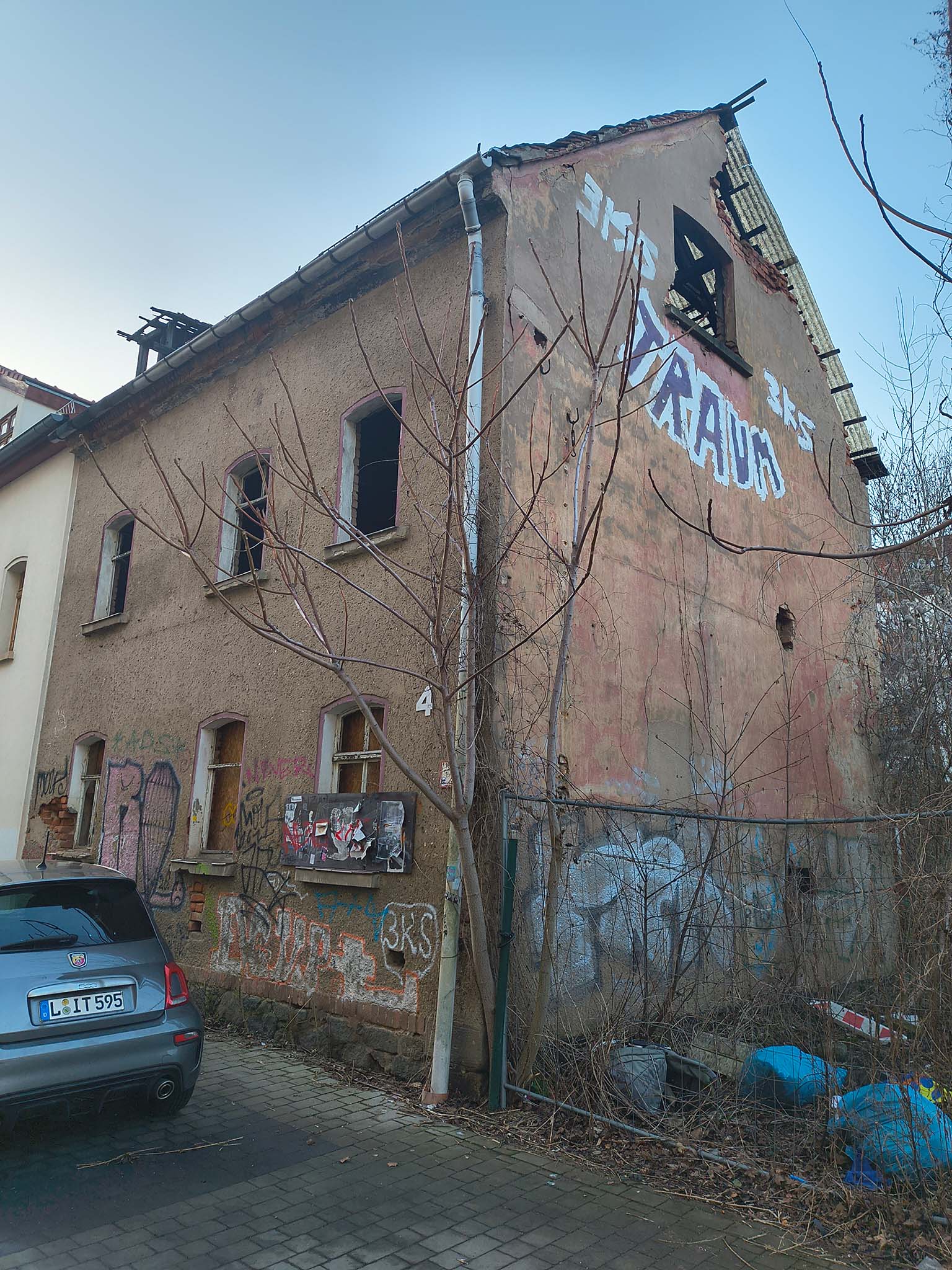
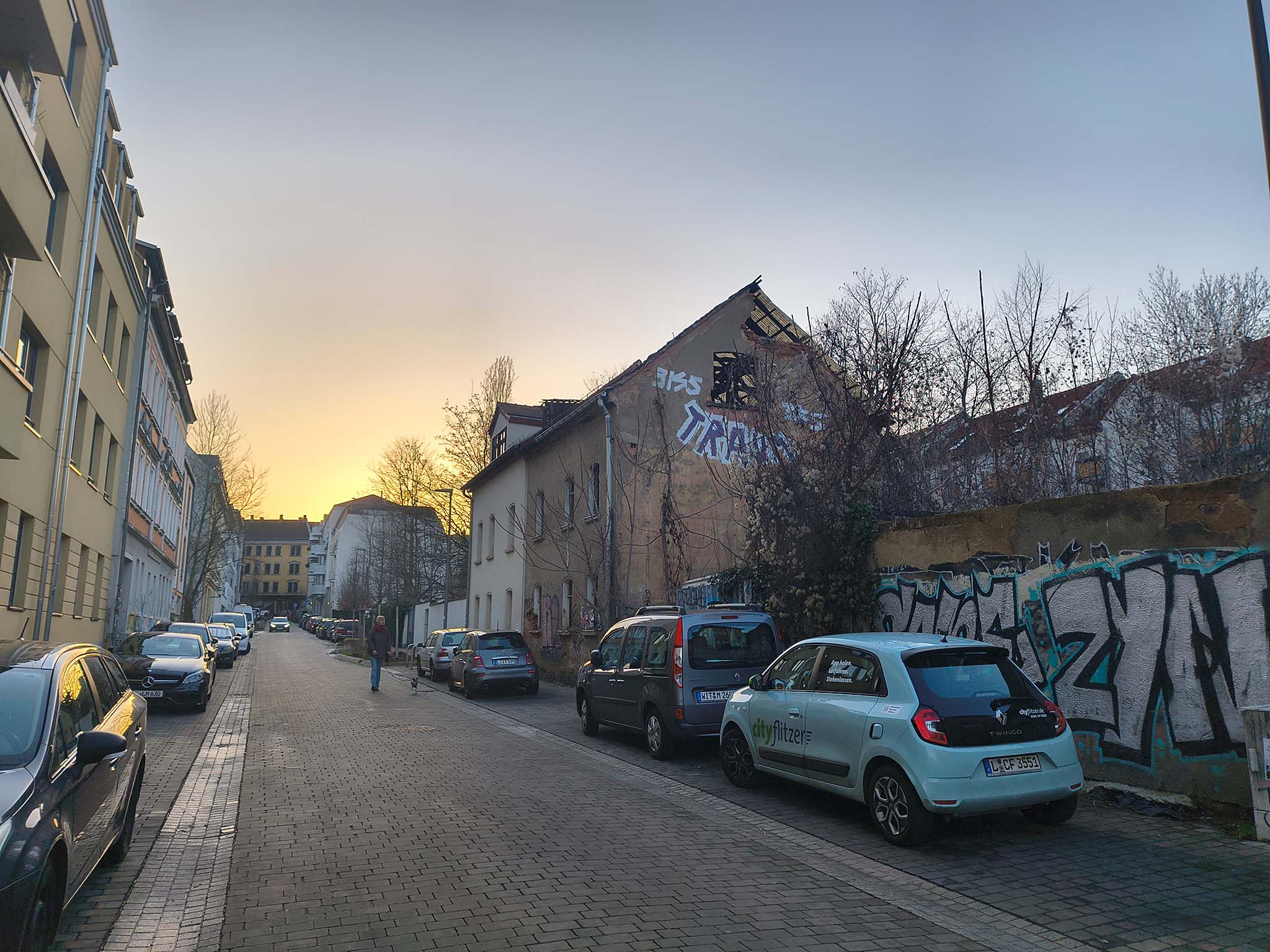
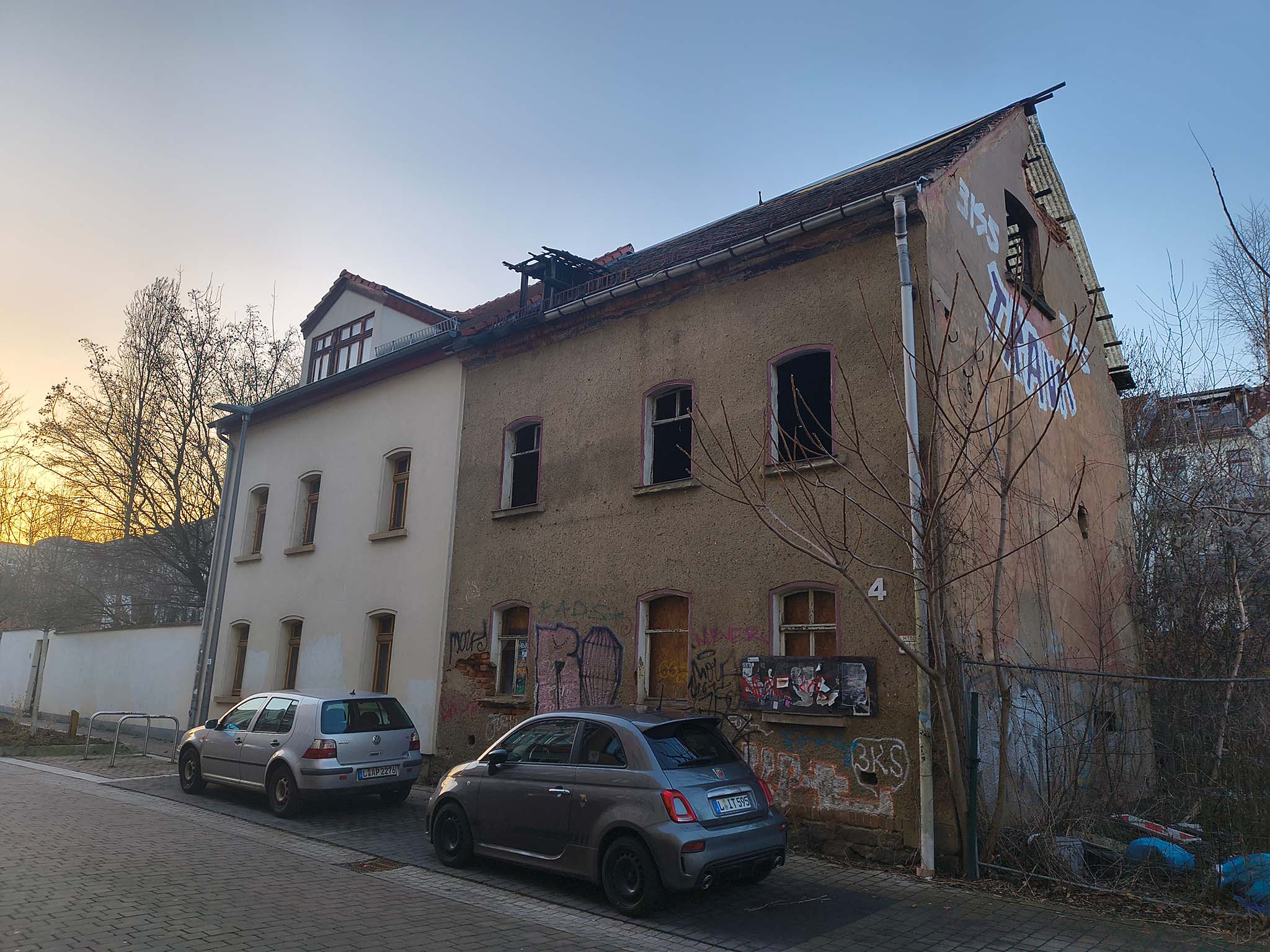
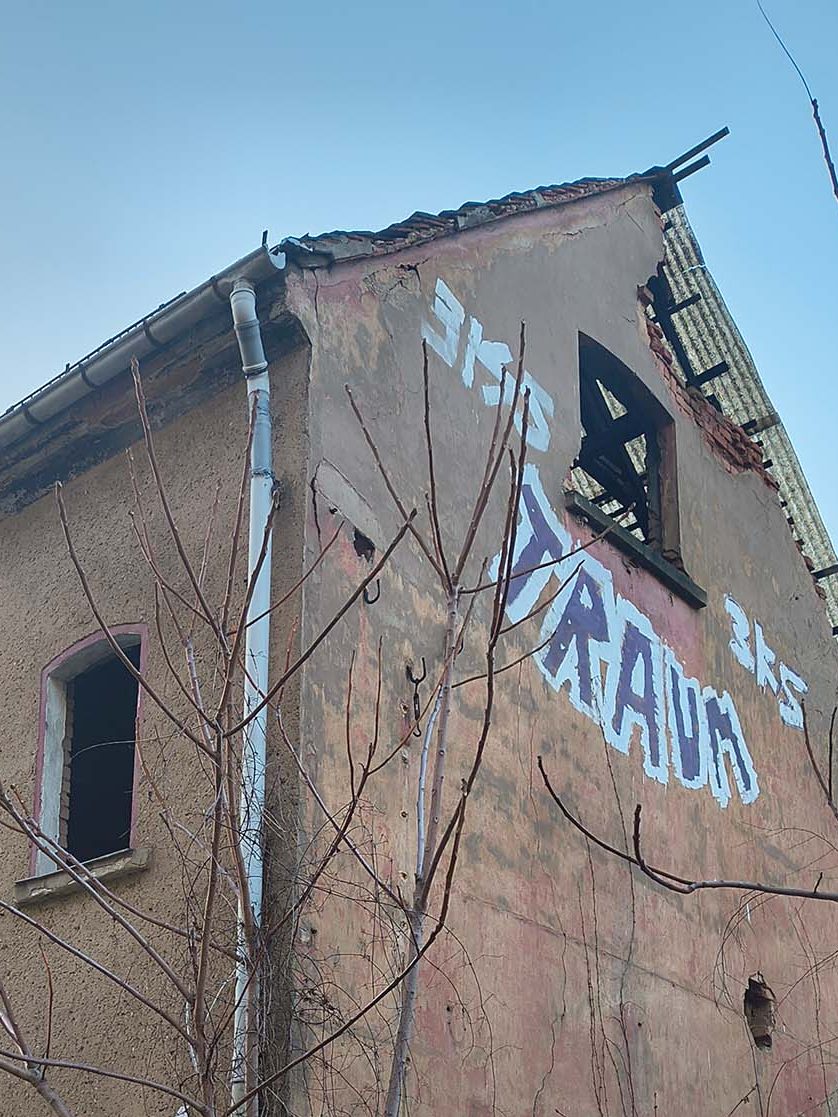
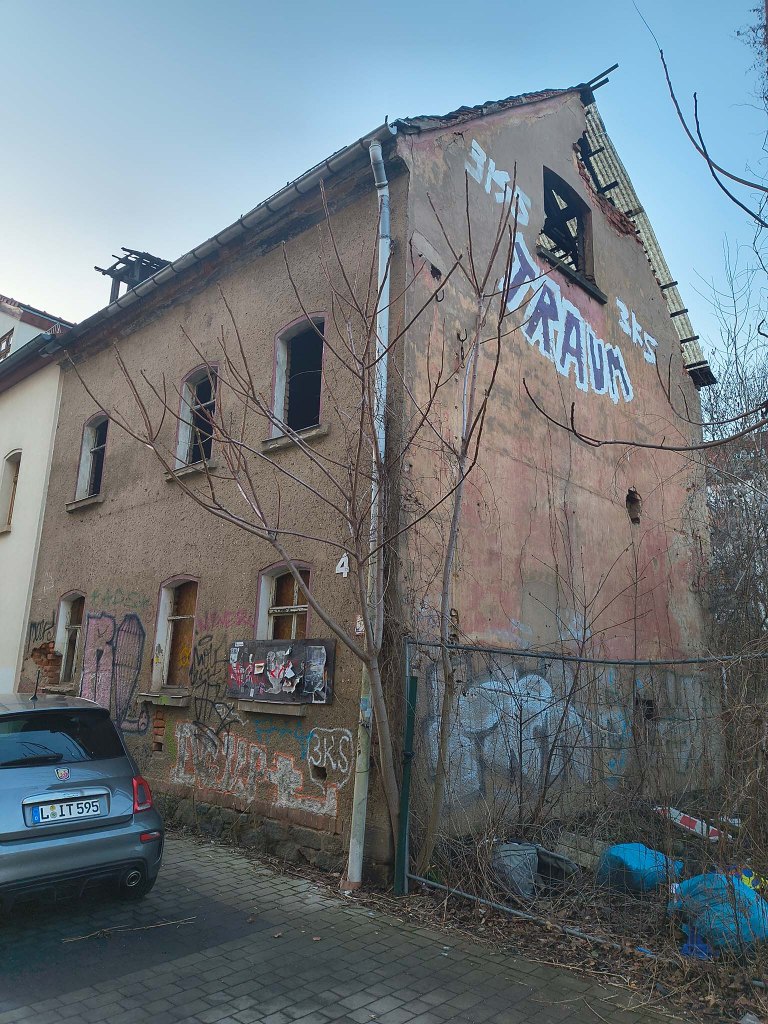
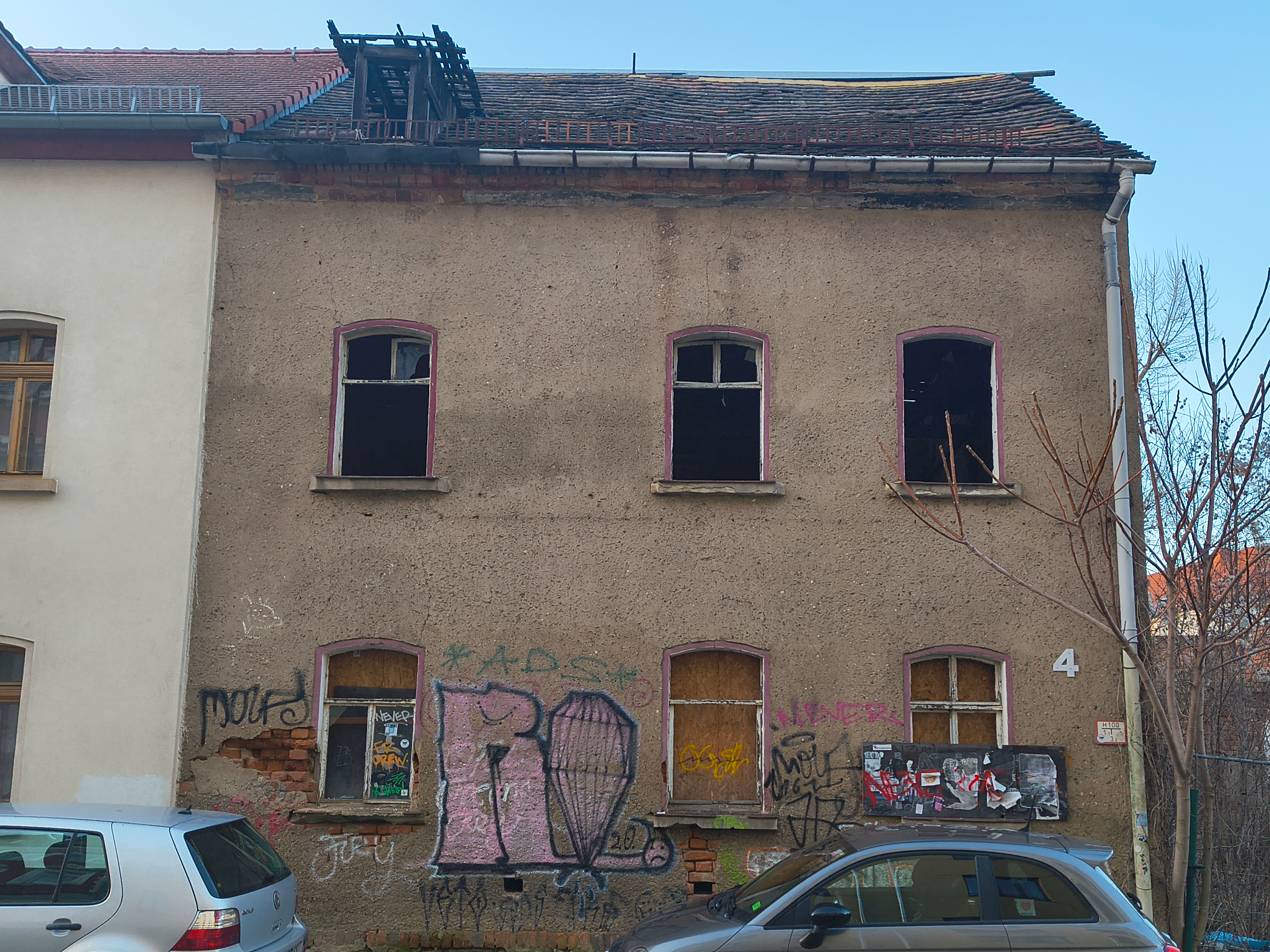
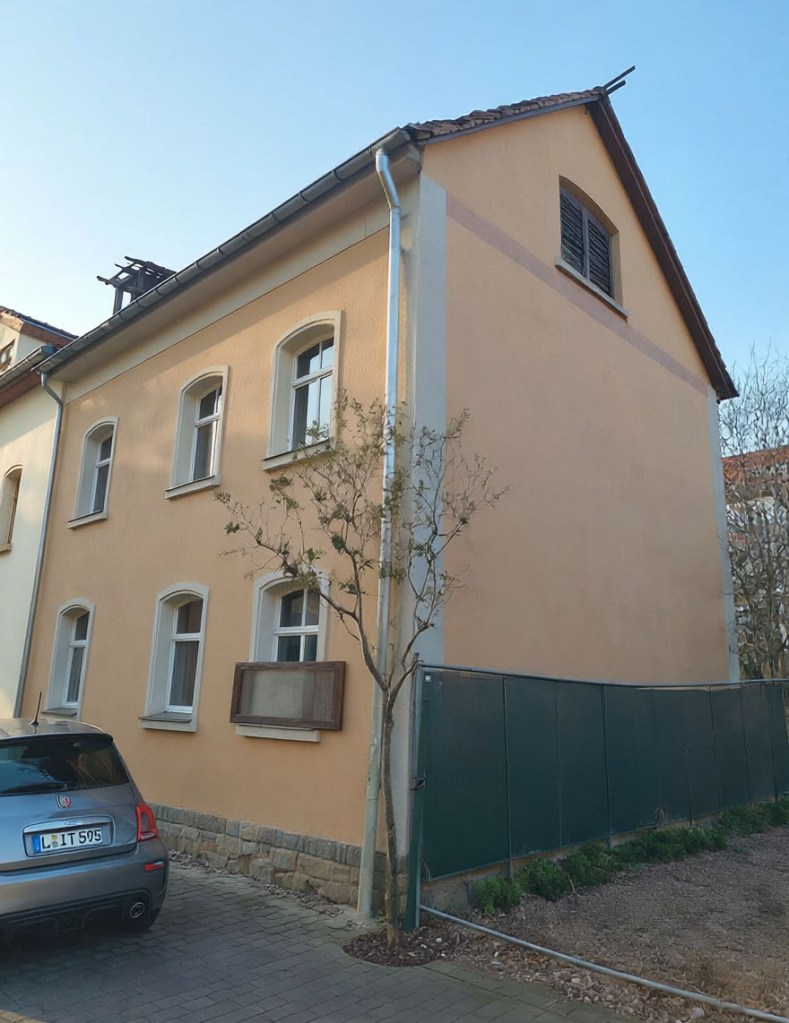
Elevation of an abandoned house in a densely populated residential area in western Leipzig.
[DE]
Leipzig West – A Triumph of Unity and Communication
Walking through the streets of my new neighborhood, I stumbled upon this small, abandoned house, and I was surprised to find such a neglected piece of heritage.
And yes, because Leipzig has now become a very attractive city, where many people are looking for a place to live and rent prices are rising steadily. The area where the house is located is in West Leipzig, an alternative, artistically vibrant neighborhood teeming with cafés bustling with young people and far-left “Vereine.” It’s also a bit run-down, but that’s part of its character and the beauty of its shops and spaces—each distinct yet often united by a spirit of community and shared use. In fact, there is no shortage of studios where artists of diverse backgrounds and interests gather—from painters to theater performers, and even those who bind books or create puppets. And then there are also meeting places for creating together and helping one another—hubs for individuals, migrants, those in need of housing, women, and vulnerable groups.
On nearby Georg Schwarz Straße, such initiatives thrive and attract people with their vibrancy, artistic offerings, picturesque charm, and the sense of activism that permeates the streets of this area. There are also many collectives focused on art, politics, and women’s and feminist support; as well as facilities established and funded by the city of Leipzig to support the elderly and people with cognitive impairments, helping them to express themselves and connect with others through art: art as a means of communication.
Following this brief introduction, my aim is to address the still-present existence of “remote” and “detached” places within the urban fabric in which they are situated, such as this small, charming house, surrounded by an overgrown garden, as if it were in a remote village outside the city, yet now within the larger urban fabric of Leipzig.
It still happens quite often, if one pays attention and does not overlook the details, to find in this beautiful city of Leipzig buildings still awaiting renovation, large industrial structures left over from the GDR era and still in disuse. There are countless “Baulücke”—that is, plots of land between buildings that are overgrown, abandoned, and unrenovated, some of which have been taken over by collectives, occupied, and now left to their own devices. Many are in the hands of construction companies or have been purchased but not yet renovated, and so the city in some areas seems a bit neglected, belonging to the past; there is this lingering trace of the former German Democratic Republic that is still palpable in some places.
[IT]
Leipzig West – il trionfo dell’unione e della comunicazione
Camminando per le strade del mio nuovo quartiere mi sono imbattuta in questa piccola casetta abbandonata e mi ha stupito trovare un tale patrimonio abbandonato.
E si, perchè Lipsia oramai è diventata una città molto attraente, dove tanti cercano casa e i prezzi degli affitti sono sempre più alti. La zona dove la casa si trova è a Lipsia ovest, in un’area alternativa, ad alta densità artistica, piena di caffè che brulicano di giovani e “Vereine” di sinistra spinta. E’ anche un pò sporca, ma questo fa parte della sua personalità e della bellezza di negozi e aree gli uni diversi dagli altri, ognuno con la propria particolarità e uniti spesso dallo spirito di frequentazione e uso condiviso. Non mancano infatti atelier, dove si concentrano artisti d’origine e interesse diversi, dai pittori ai performers teatrali, c’è anche chi rilega libri o crea marionette. E poi ci sono anche luoghi dell’incontro per creare assieme, aiutarsi, punti di riferimento alla persona, ai migranti, a chi ha bisogno di una casa, per donne e categorie deboli.
Sulla vicina Georg Schwarz Straße fomentano realtà di questo genere e attraggono per la vivacità, l’offerta artistica, per la pittoricità e il senso attivista che si percepisce passeggiando per le strade di quest’area. Esistono anche molti collettivi a sfondo artistico, politico, di sostegno e supporto femminile e femminista; così come anche luoghi dedicati e finanziati dalla città di Lipsia per il sostegno agli anziani e alle persone con deficit di capacità cognitive affinché siano facilitati attraverso l’arte all’espressione di sé e al contatto con gli altri: l’arte come via comunicativa.
In seguito a questa breve introduzione il mio obiettivo è di tematizzare l’ancora presente esistenza di “luoghi remoti” e “distaccati” dalla matrice urbanistica nella quale si trovano, come ad esempio questa casetta piccina e graziosa, circondata da un giardino incolto, come se si trovasse in un villaggio intaccato fuori porta, ma ora dentro la grande scala urbana di Lipsia.
Succede ancora abbastanza spesso, se si è accorti e non si trascurano i dettagli, di trovare in questa bella città quale è Lipsia, edifici ancora da ristrutturare, grandi strutture industriali lasciate dopo la DDR e ancora in disuso. Ci sono moltissime “Baulücke”, ovvero terreni tra un edificio e l’altro incolti, abbandonati, non ristrutturati, presi anche in mano da collettivi, occupati e ora abbandonati a sè stessi. Molti sono in mano a delle imprese di costruzione o comunque stati comprati, ma non ancora rinnovati e così la città in alcuni suoi tratti sembra un pò trascurata, appartenere al passato, c’è questa scia dell’ex repubblica democratica tedesca in parte ancora respirabile.
 ReVivoArtistry