
Säuglings- und Kinderklinik am Weißensee, Berlin – Entwurf – Sanierungspotenzial
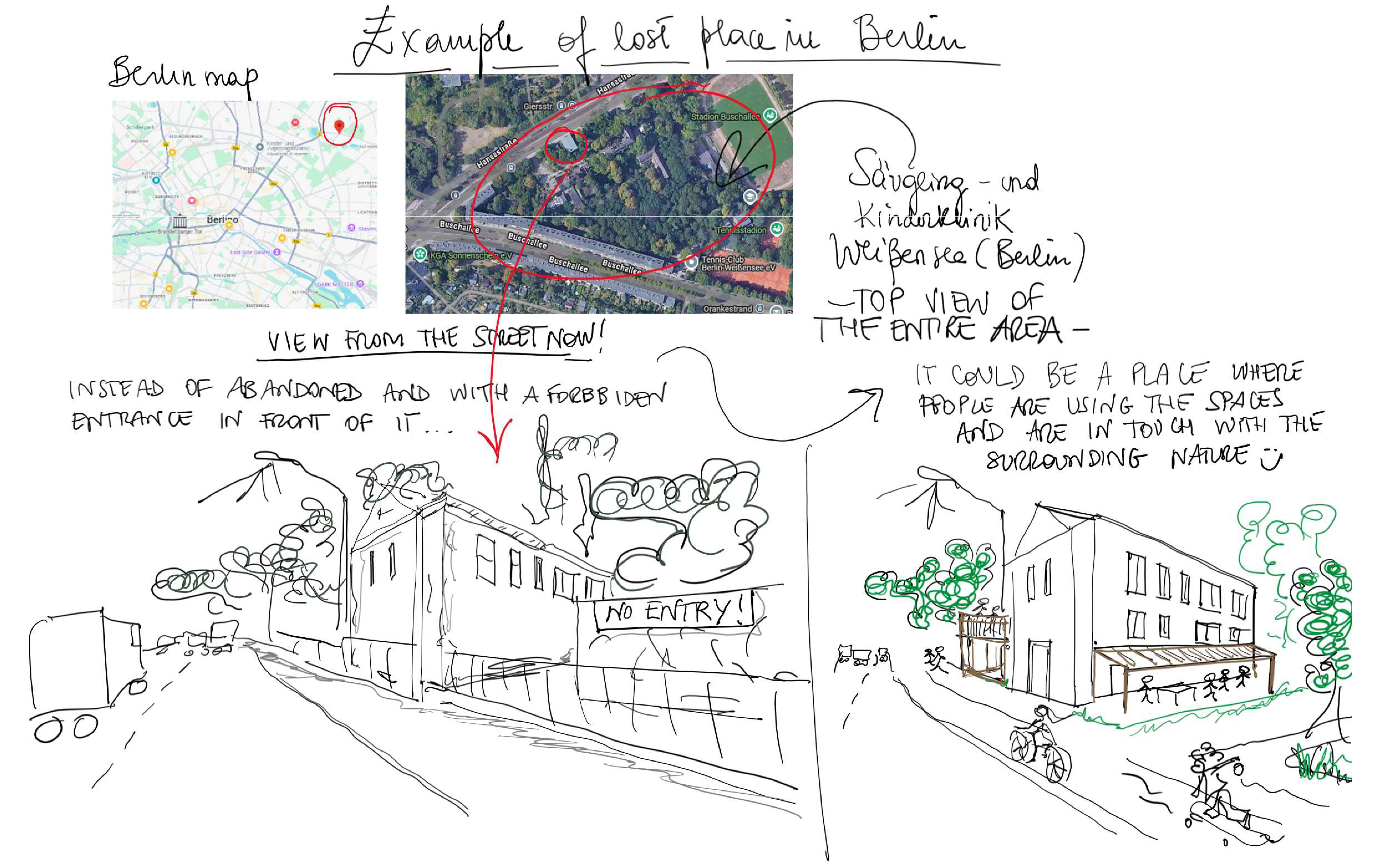
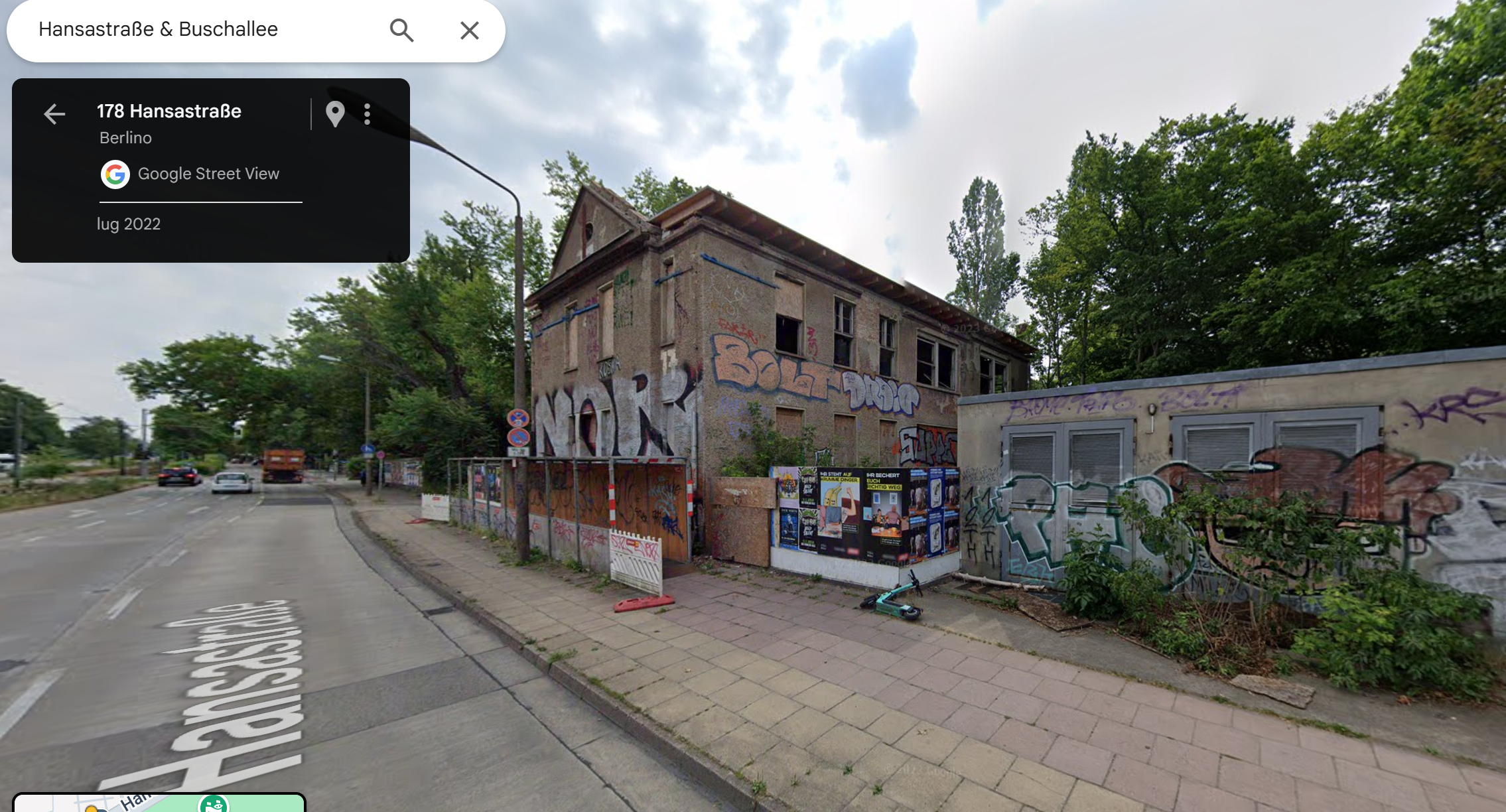
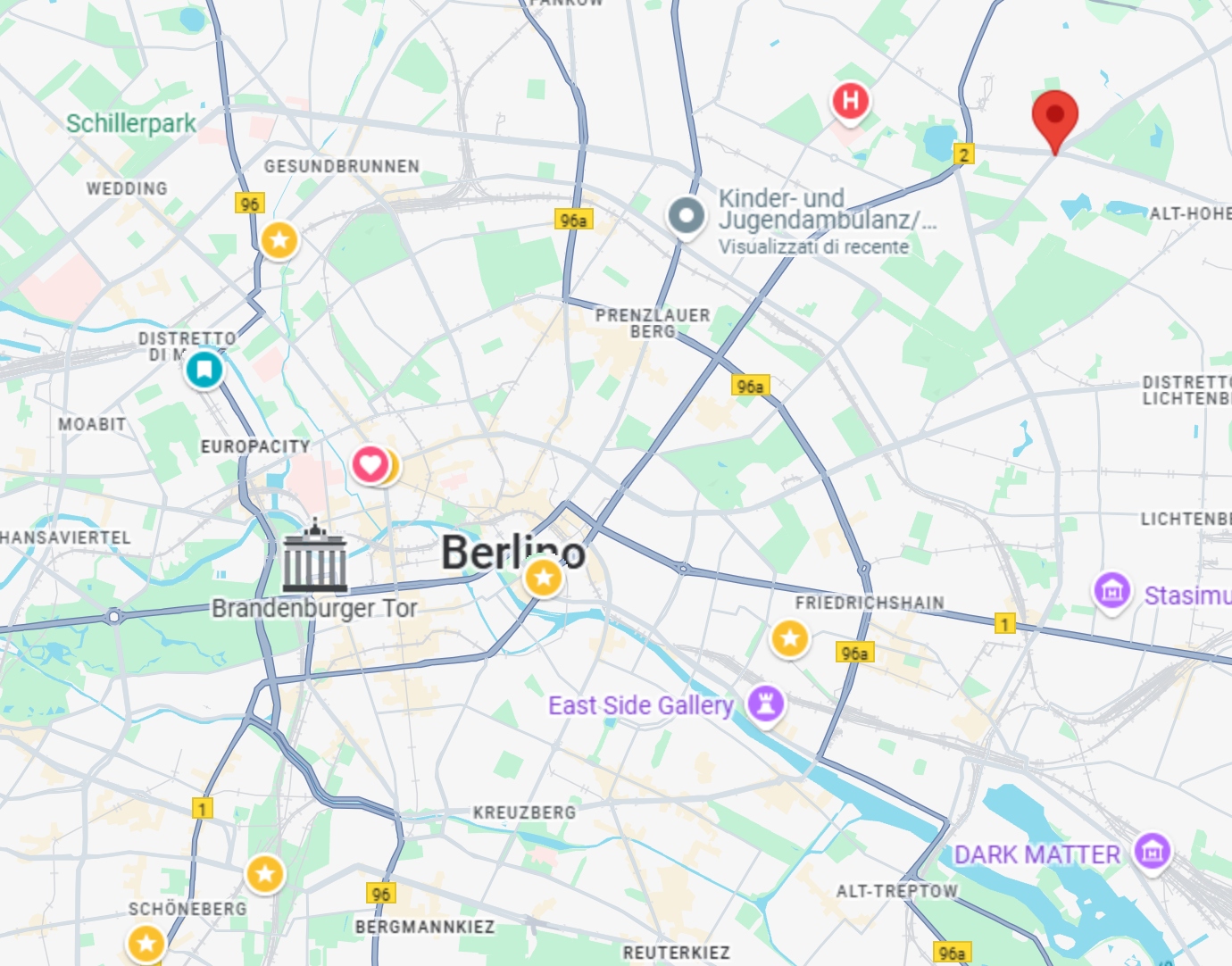
Sketch of the development project for the disused and abandoned area of … for participation in the study, integration and active participation programme at ZKU (Berlin)
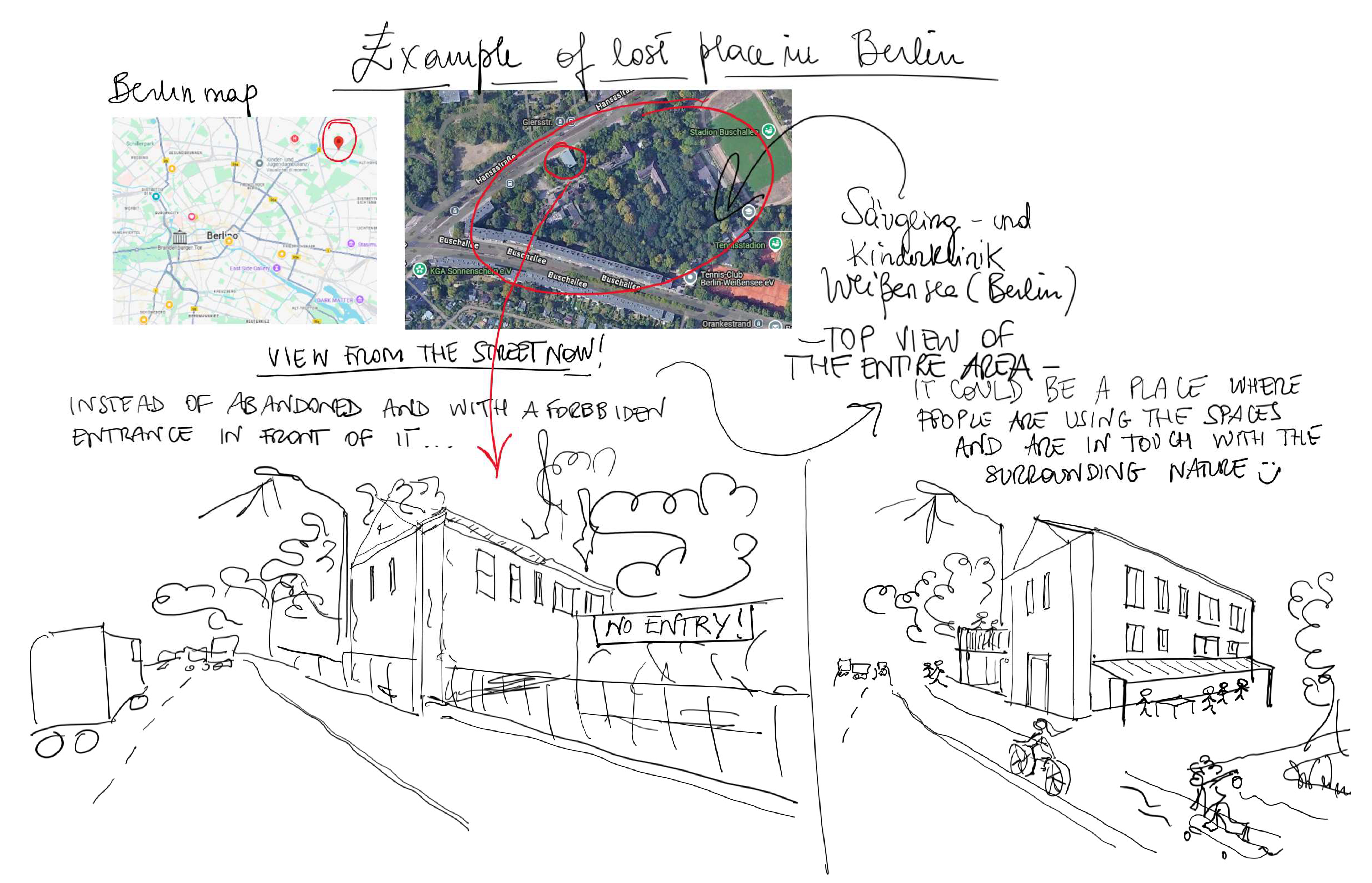
Weißensee (Berlin)
Description
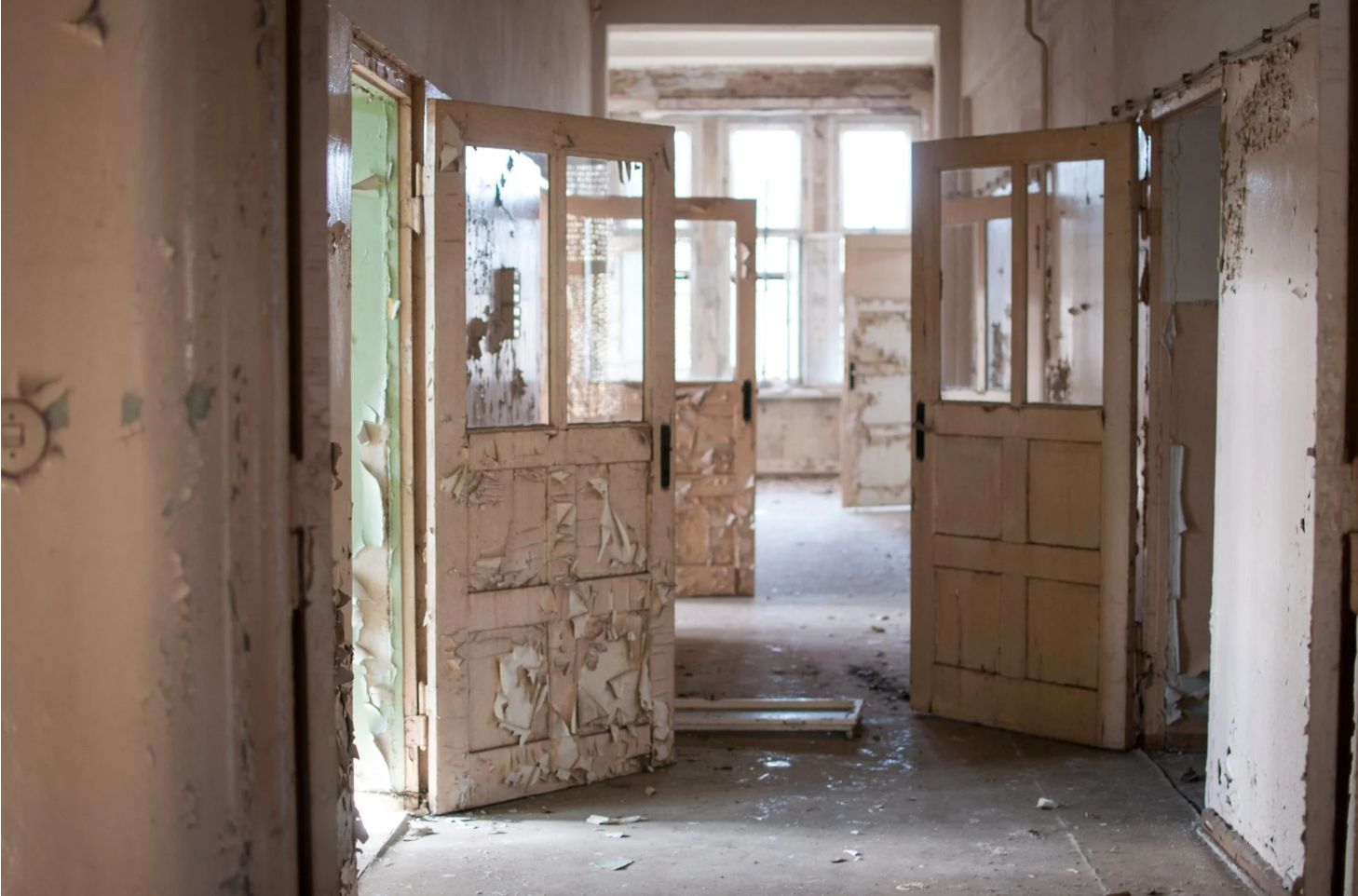
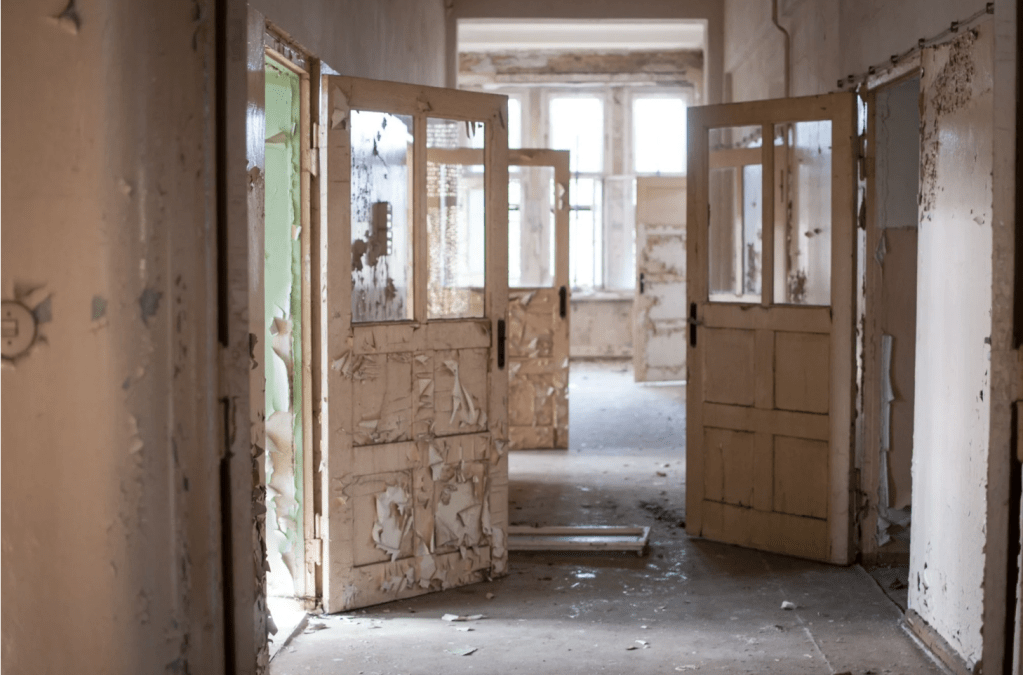
Images of the interior of the clinic today
Relational Urbanism & the Art of Reweaving Places
My practice explores the spaces that fall through the cracks—abandoned buildings, neglected corners, fragmented urban edges, and transitional territories that no longer hold a clear identity. I see these places not as voids, but as silent potentials: seeds of future communities, meeting points for differences, and canvases for new narratives.
Through what I call relational urbanism, I work to transform segregation into connection. Cities constantly reshape themselves under cultural, social, and historical forces. Within this continuous flux, I focus on the thresholds: spaces that appear useless or forgotten, yet hold enormous power for reconnection. With minimal resources and strong participatory processes, they can become catalysts for creativity and collective meaning.
My research and design approach is guided by a simple belief: space is defined by the relationships it enables. By rethinking “fractured” places—whether in Berlin or any other city—I aim to shape environments that welcome diversity, coexistence, and new forms of living. This includes everything from urban voids and abandoned sites to hybrid community spaces where nature, humans, and non-human actors can all find a voice.
Years of visiting ecovillages and studying rural regeneration have deeply influenced my vision. These communities embody many of the answers we lack today: identity, belonging, intergenerational exchange, low-impact living, authenticity, and a balanced relationship with nature. They inspire me to imagine ecovillages in the city—spaces where people can meet, collaborate, slow down, and heal.
Across my work, I explore themes such as:
• ecological and socially sustainable places built with local and recycled materials
• environments that celebrate diversity and authentic self-expression
• hybrid, multifunctional spaces for art, learning, food, care, and everyday life
• community gardens, intergenerational hubs, and nature-based education
• reintegration paths for marginalized groups through creativity and land care
I believe in unity through diversity—in designing spaces flexible enough to evolve, adapt, and hold many identities at once. My goal is to create resilient communities where architectural design, social innovation, and environmental responsibility come together to support new ways of living.
Ultimately, my work is an invitation:
to look again at what we overlook,
to imagine possibilities where others see decay,
and to weave relationships—human and beyond human—through the spaces that shape us.
 ReVivoArtistry