





Applied Arts at HGB Leipzig: A Journey Through Techniques, Materials, and Inspiration
by Stefania Molinari
Since April, I’ve been attending an applied arts course at the Hochschule für Grafik und Buchkunst (HGB) in Leipzig, taught by artist and lecturer Mussafer Qassim. Qassim is not only a skilled technician, but also an artist who not only gives us an overview of the working and applied art methods he uses, but also encourages us to explore on our own initiative and not to be afraid of making mistakes because everyone has their own technique:
“This is the method I use, but there can be many others, because each artist follows his or her own intuition and inspiration.”
This course has proven to be an immersive experience, where hands-on work and reflective practice go hand in hand with the historical and technical study of surfaces, pigments, and traditional artistic techniques.
Over the past weeks, we’ve explored a variety of topics, including collage, perspective, and life drawing, each one helping us bridge the gap between thought and form.
The First Layer: Rabbit Skin Glue and Patience
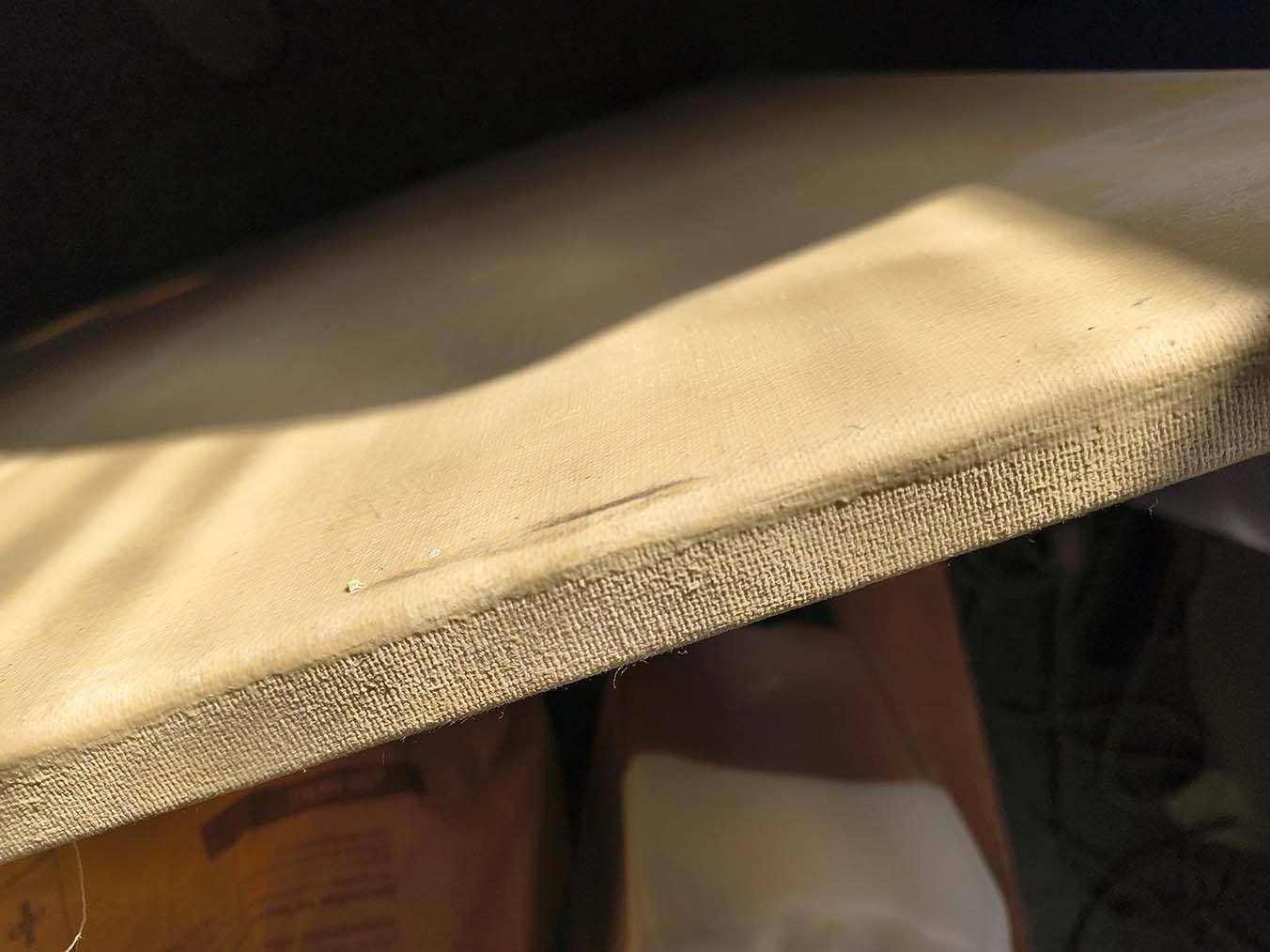
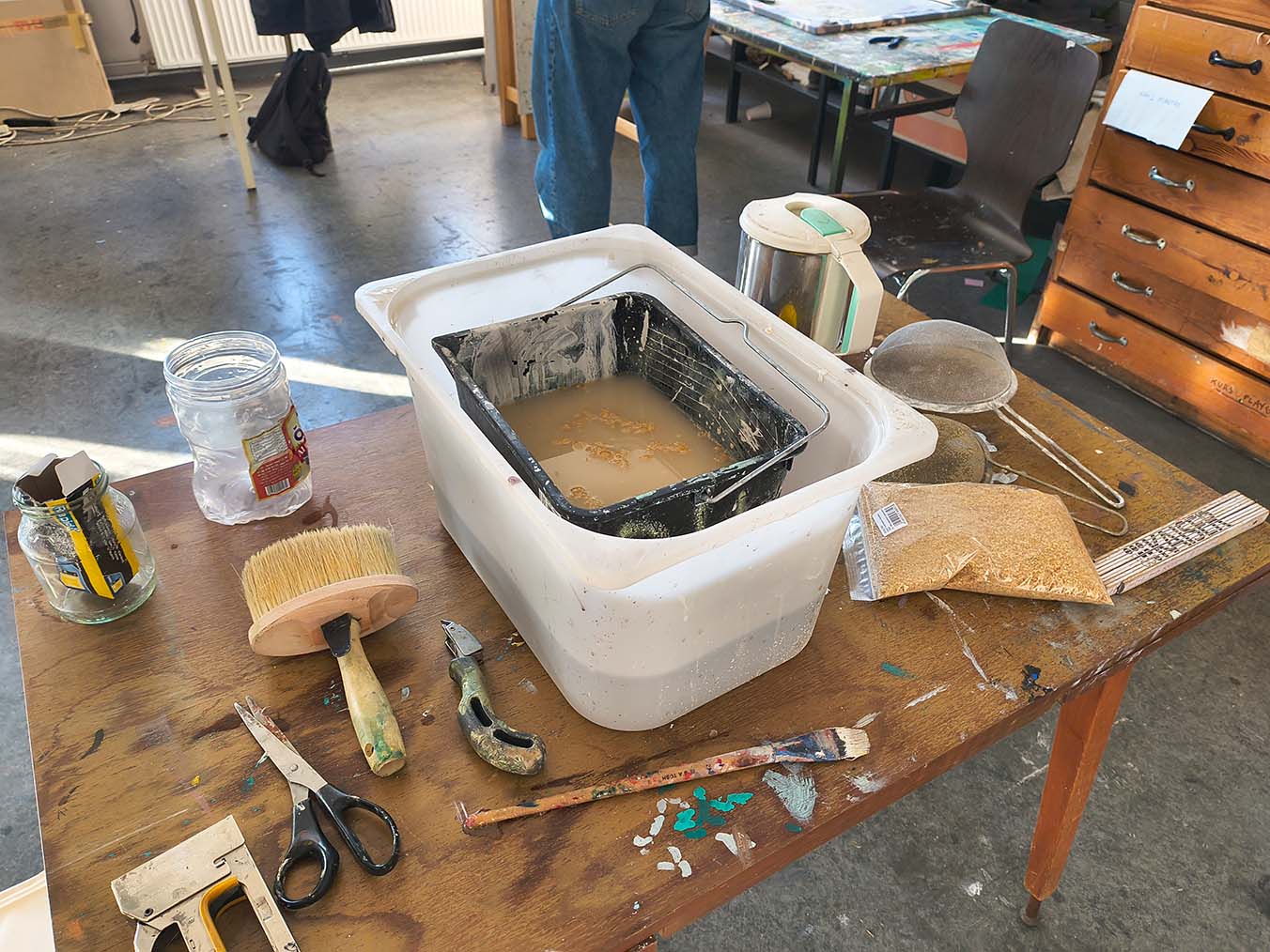
In our most recent class, last Tuesday, we dove into the foundational process of preparing our canvases: applying the first layer of ground. This involves working with rabbit skin glue (or synthetic alternatives), which is dissolved in boiling water and left to sit for at least 3–4 hours. The glue can be stored for a day, even refrigerated, to extend its usability. Once applied to the fabric, it serves to seal the small pores in the linen or cotton, creating a smoother surface for painting.
From Fabric to Canvas
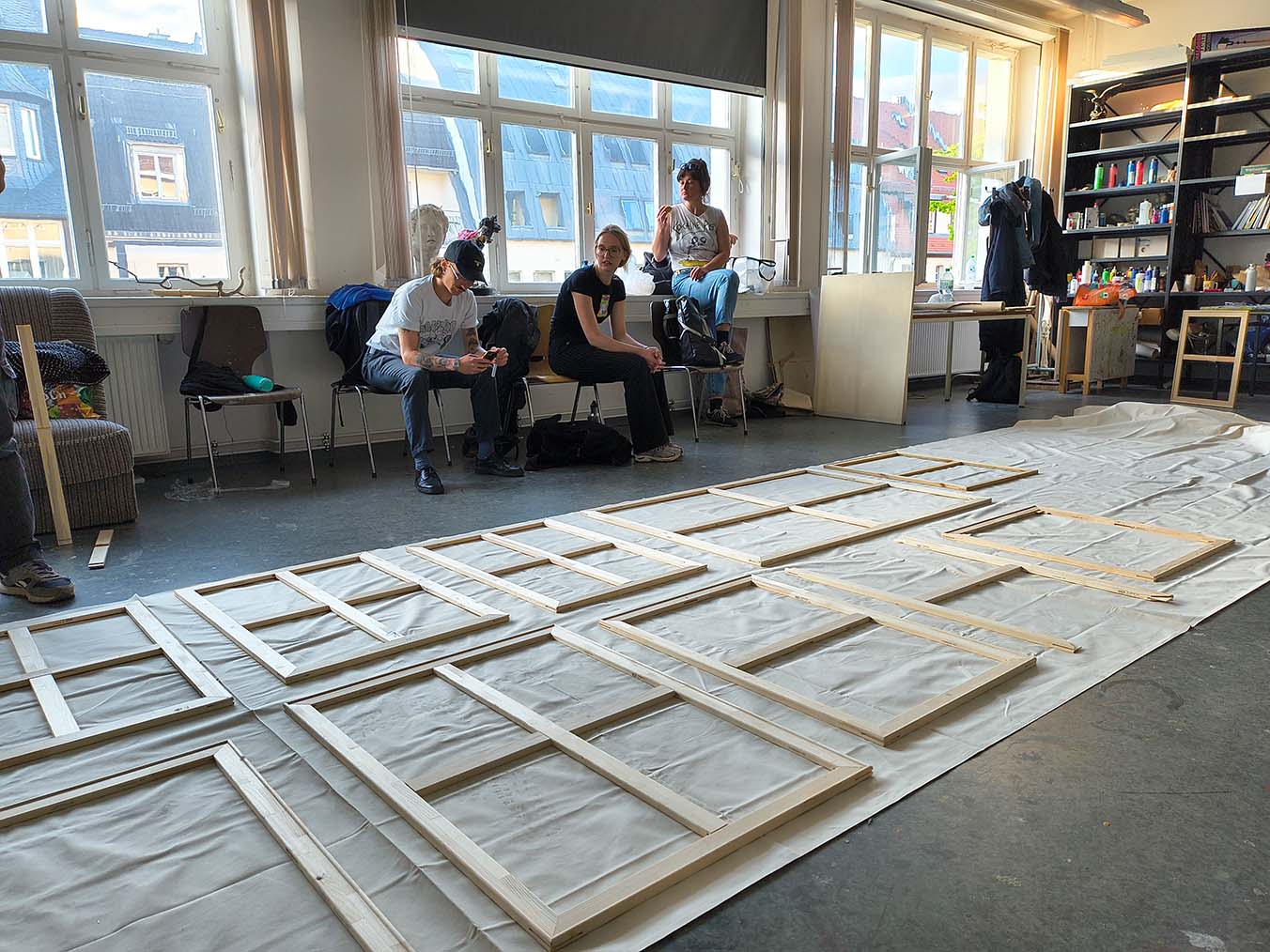
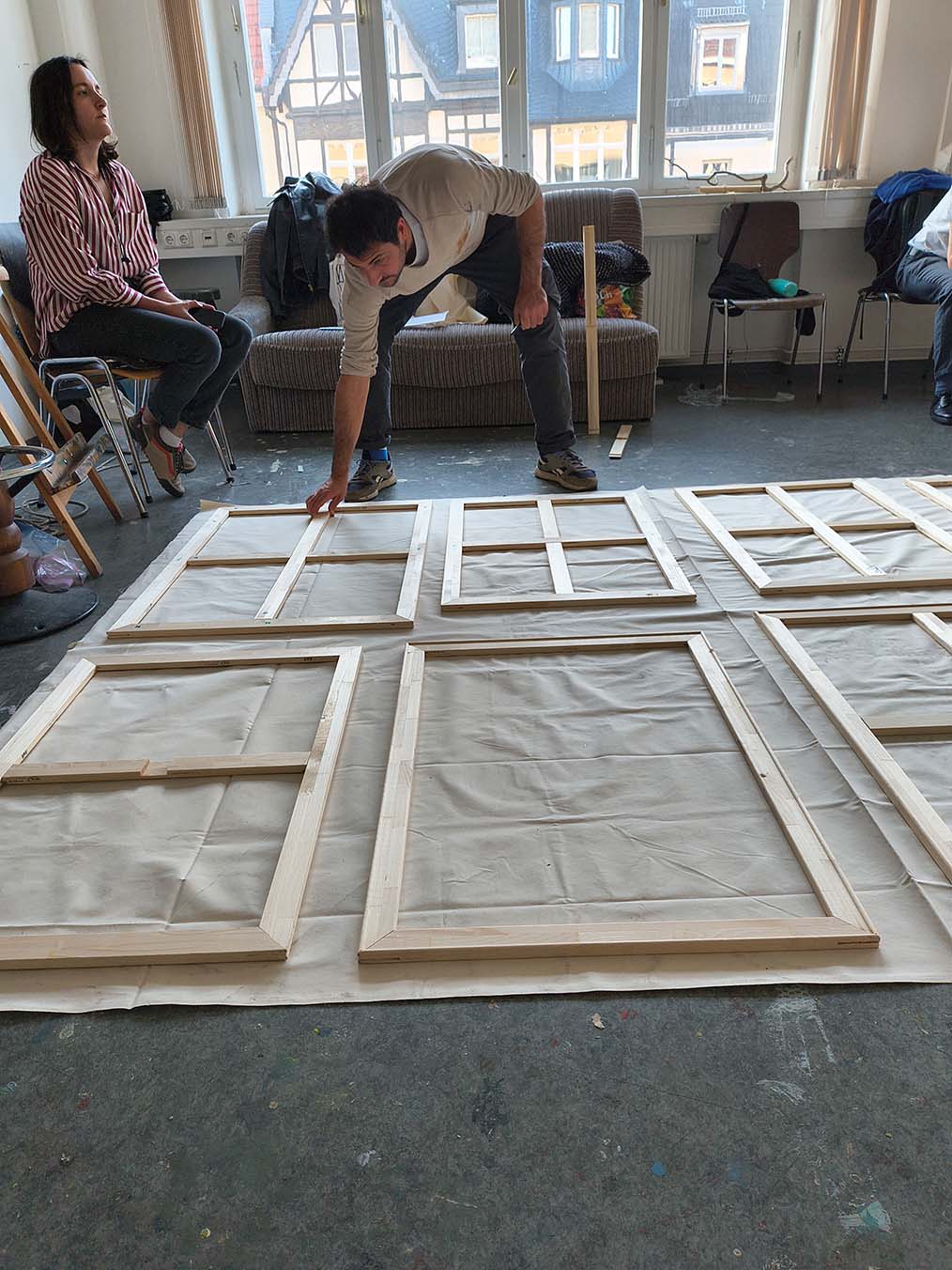
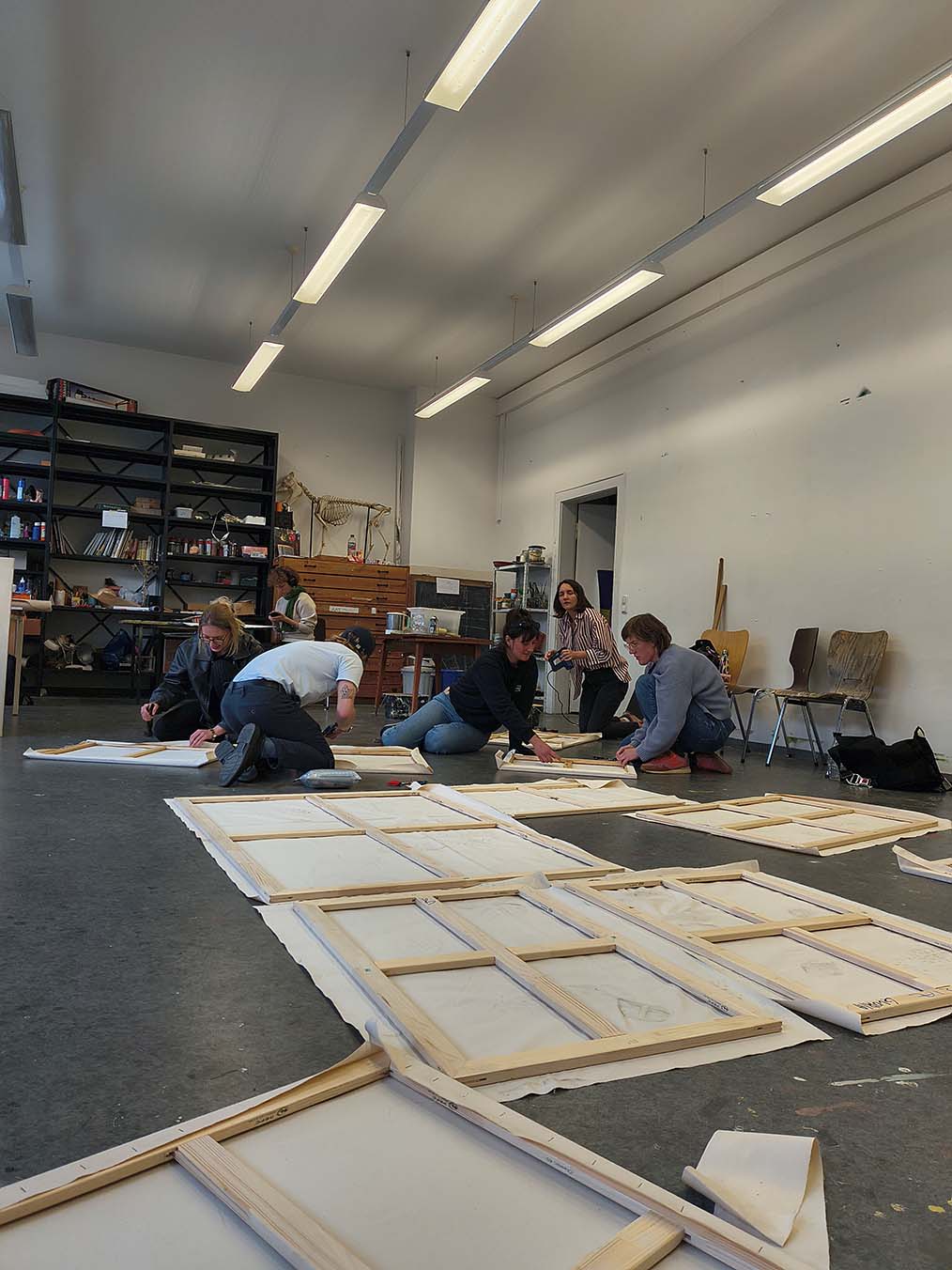
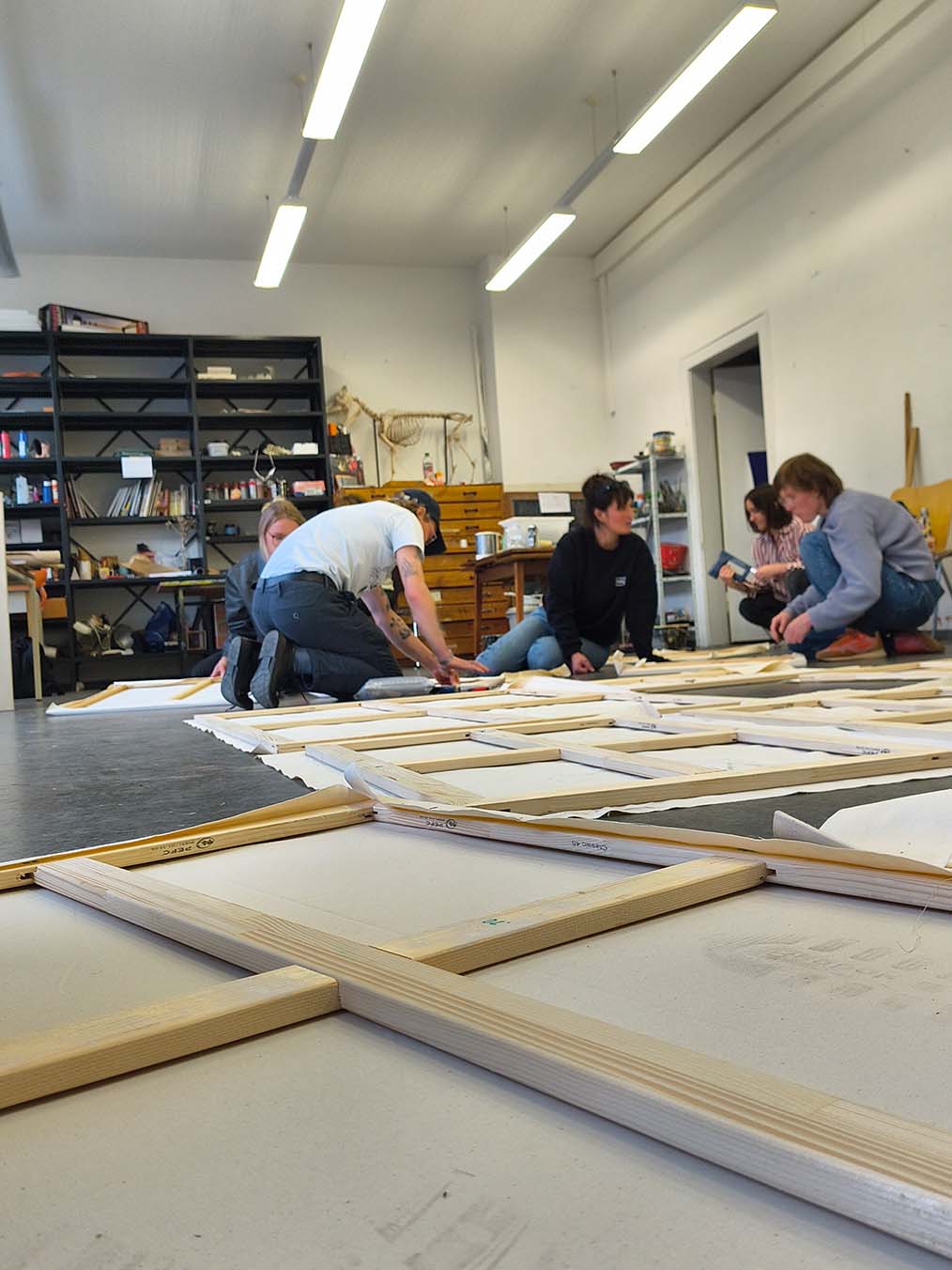
Meanwhile, we began preparing our handmade canvases. We purchased a large piece of linen/cotton cloth—over ten meters long—and laid it flat to position the wooden stretcher frames we had built ourselves, each of varying sizes. After carefully cutting the fabric, we stretched and stapled it to the frames.
We learned how to measure the right distance from the edge of the frame, how to stretch the fabric properly, and how to use different stapling methods—some working in opposing directions (left/right, top/bottom), others following the mirror-like “windmill” method for even tension.
Waiting for the Second Layer… and Inspiration
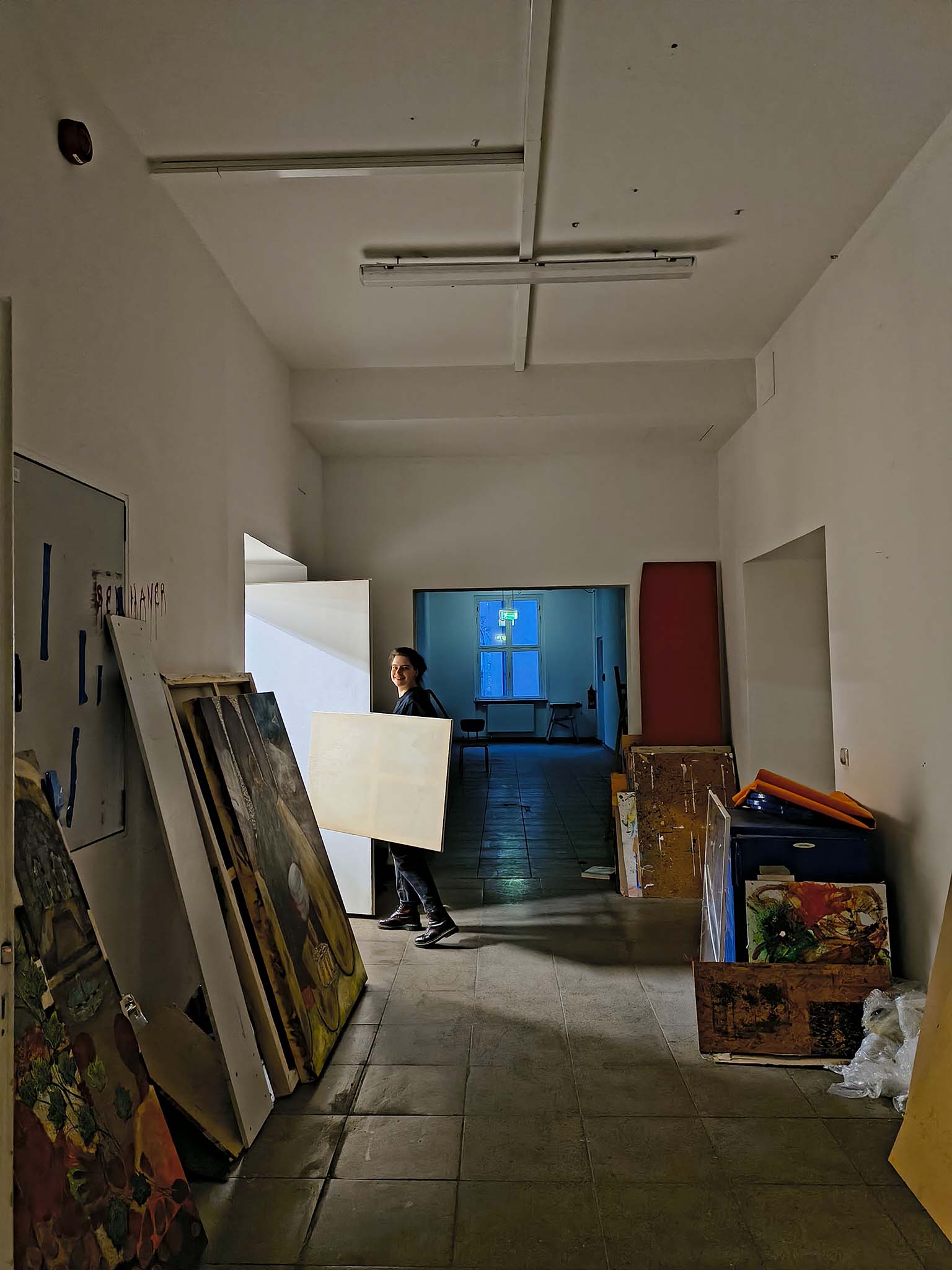
With the canvases assembled, we applied the diluted glue mixture and set everything aside in a drying room. In the next session, we’ll move on to the second ground layer, a thicker mixture made of linseed oil, chalk or gesso, and water, which will complete the preparation process.
In the meantime, a new creative phase is beginning: the search for a personal theme to develop for our June exhibition. Each of us is looking inward, drawing from what we’ve learned so far and the subtle tension between structure and intuition.
I can’t wait to see where this journey will take us!!!
More info on: https://www.hgb-leipzig.de/ and on https://musaferqassim.com/.
 ReVivoArtistry, Inh. Stefania Molinari
Leave a comment